


CBRL is happy to announce the release of Levant’s new special issue!
Levant Journal – Special Issue Introduction
by Guest Editors: Susanne Kerner and Andrea Polcaro
This special volume is the outcome of the workshop ‘De-constructing a Megalithic Landscape: dolmens in the Levant between the Late Chalcolithic and the Early Bronze Age II: landscapes, rituals and socio-economics’ which took place during the 13th ICAANE in Copenhagen. We would like to use this occasion to thank the organizers of the conference for accommodating our workshop, as well as all the participants. We would also like to thank the Levant editor, Caroline Middleton, for her invaluable assistance, and the lecturers, who submitted their lectures as articles.
The reasons for organizing the workshop were two-fold. Firstly, the essential need to contextualize our findings for both the general public and the wider academic community. This should be an obvious statement in archaeology, both for artefacts as well as monuments. Nevertheless, concerning dolmens in the southern Levant, this imperative has not always been followed. In the past, most of these structures were only excavated for the inner burial chambers, including, in the more complete cases the surrounding platforms, usually the only visible features connected to the dolmens. Similarly, standing stones were often documented without excavation or any attempt to connect them to other structures in the vicinity. The lack of more extensive excavations, connecting these structures to their surroundings, hinders archaeologists in identifying important data, for example: a) stratigraphical relationships between the funerary and other monuments; b) findings reflecting actions happening between the dolmens or around the standing stones, expressions of rituals and other important cyclical cultic events performed inside the megalithic context; c) the presence of pathways and streets connecting the monuments with each other and particularly the clusters of tombs with a nearby settlement and whether that settlement was permanent or temporary.
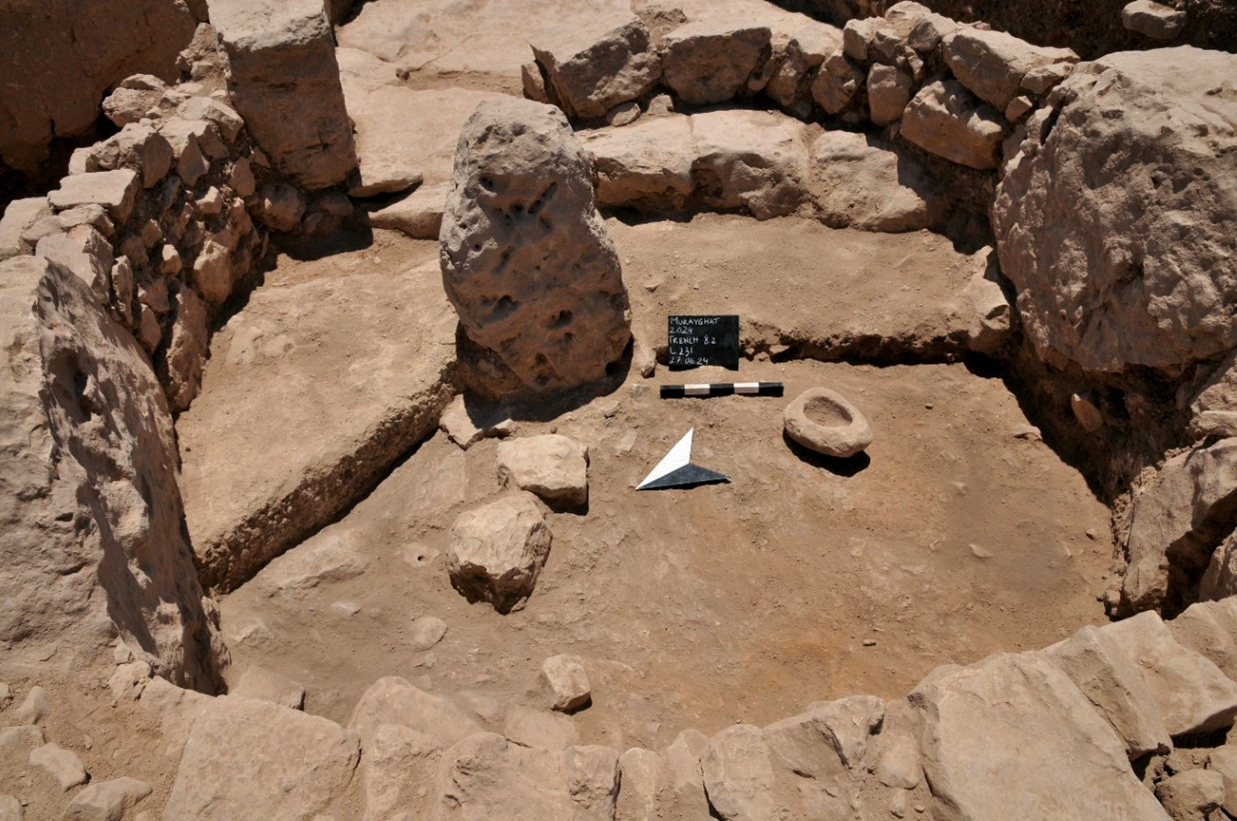
The second reason relates to the question, why? Why do megalithic structures appear at a certain time in a certain form? What precursors exist? What political, social, economic and cultural conditions lead to the existence of dolmens and standing stones. A phenomenon, which appears in different forms in many regions of the world and requires so much human effort, requires explanations. In order to attempt some explanations, we concentrated on a shortish timespan and a particular area, excluding for example the EB IV dolmens, which are not only structured differently, but might also have been built for different reasons.
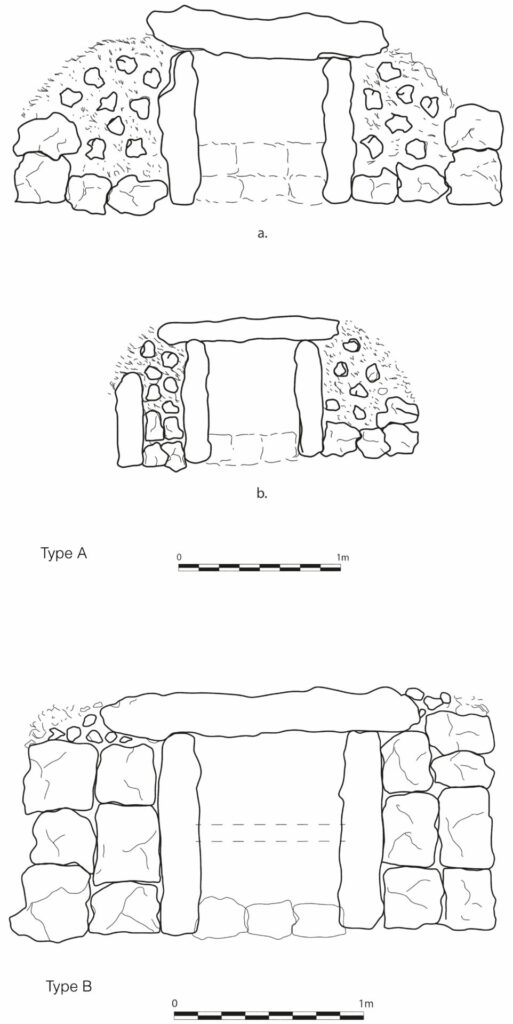
This volume presents case studies and explorations of megalithic structures undertaken in recent years and designed to analyse these monuments, not only for their architecture and associated findings, but also their contextualization. This has been done through investigating nearby settlements or other contemporary archaeological evidence identified in the vicinity. It is also an attempt to analyse the dolmens in a more systematic way, as a step towards a typology. The agency of people and their motives plays a role, as does the question of landscape and its importance, both for the construction of megalithic monuments and for the humans who built them.
This will, hopefully, lead to a better understanding of the megalithic phenomenon and its meaning for the ancient societies that used it to reshape the landscape based on new economic production systems and ideological concepts developed in the second half of the 4th millennium BC. With regard to chronology, as we are coming from different traditions, there has been no attempt to smooth out different concepts.

We strongly believe in the importance of multi-disciplinary studies on the southern Levantine dolmens in their historical context. Megalithic monuments represent a rich cultural heritage in south-west Asia, which, in several countries, is affected by the continuous damage arising from encroaching urbanization; their complete disappearance in the future is a real risk. This must be avoided, because the megalithic heritage of south-west Asia has not yet been studied to its full extent and holds many unanswered questions. The fate of the European dolmens, destroyed since classical times by agricultural exploitation and the expansion of urban settlements, must be prevented. The southern Levantine dolmens offer an outstanding opportunity to investigate the diverse kinds of historical processes conducted by human societies in the whole Mediterranean area during the initial transition to urbanization.