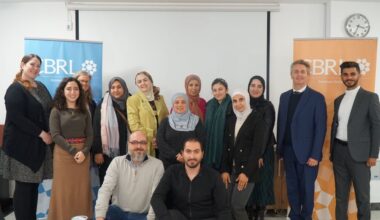


CBRL, in collaboration with the Andrea Zerbini Foundation, organised a two-day online workshop on the 30th and 31st March, in memory to celebrate the life, scholarship, and enduring legacy of the late Dr Andrea de Silva Zerbini (1984–2019). The workshop Andrea Zerbini: Legacy, Archaeology, and Digital Innovation, brought together colleagues, collaborators, and scholars from Jordan, the UK, and beyond to honour a remarkable archaeologist of the ancient Near East and a passionate advocate for cultural heritage protection.
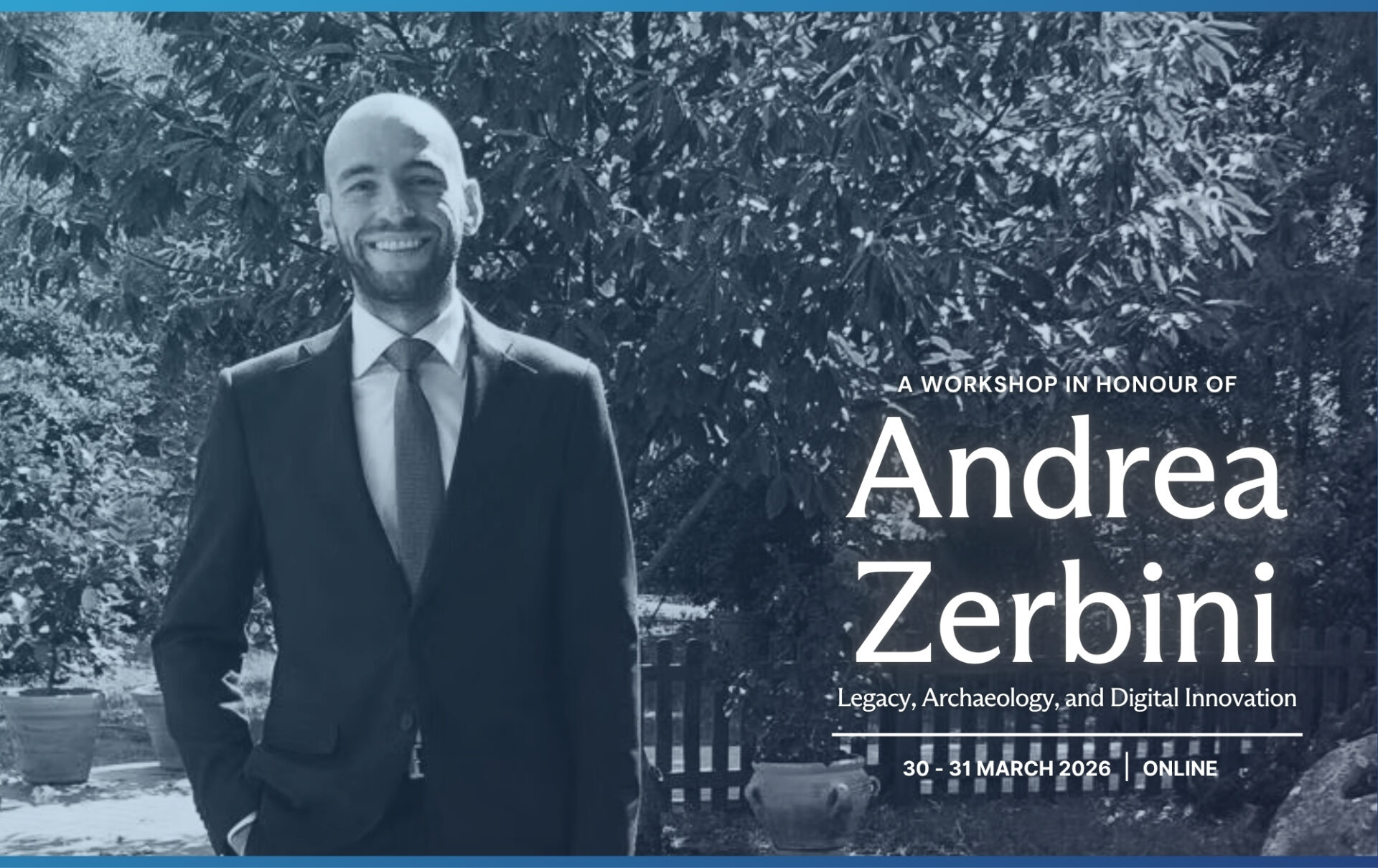
Andrea Zerbini’s work was distinguished by his ability to combine deep historical knowledge with innovative digital methodologies, including satellite imagery, GIS, and database systems, to document, monitor, and preserve endangered cultural heritage across Jordan and the wider Levant.
Day 1 – 30 March 2026: Archaeological Research and Digital Practice
Dr Jane Humphris, CBRL Director, opened the workshop and introduced His Excellency Prof. Fawzi Abu Danah, Director General of the Department of Antiquities of Jordan. In his address, he spoke about the importance of solidarity among archaeologists in challenging times and highlighted Dr Zerbini’s significant contributions to heritage preservation in Jordan, and CBRL’s continued efforts.
Giorgia Proietti (Andrea Zerbini Foundation) and Firas Bqa’in (CBRL Amman) gave a tribute to tribute to Andrea’s life and personality. Dr Carol Palmer delivered a keynote lecture reflecting on Andrea’s academic journey, research vision, and his lasting impact on Levantine archaeology.
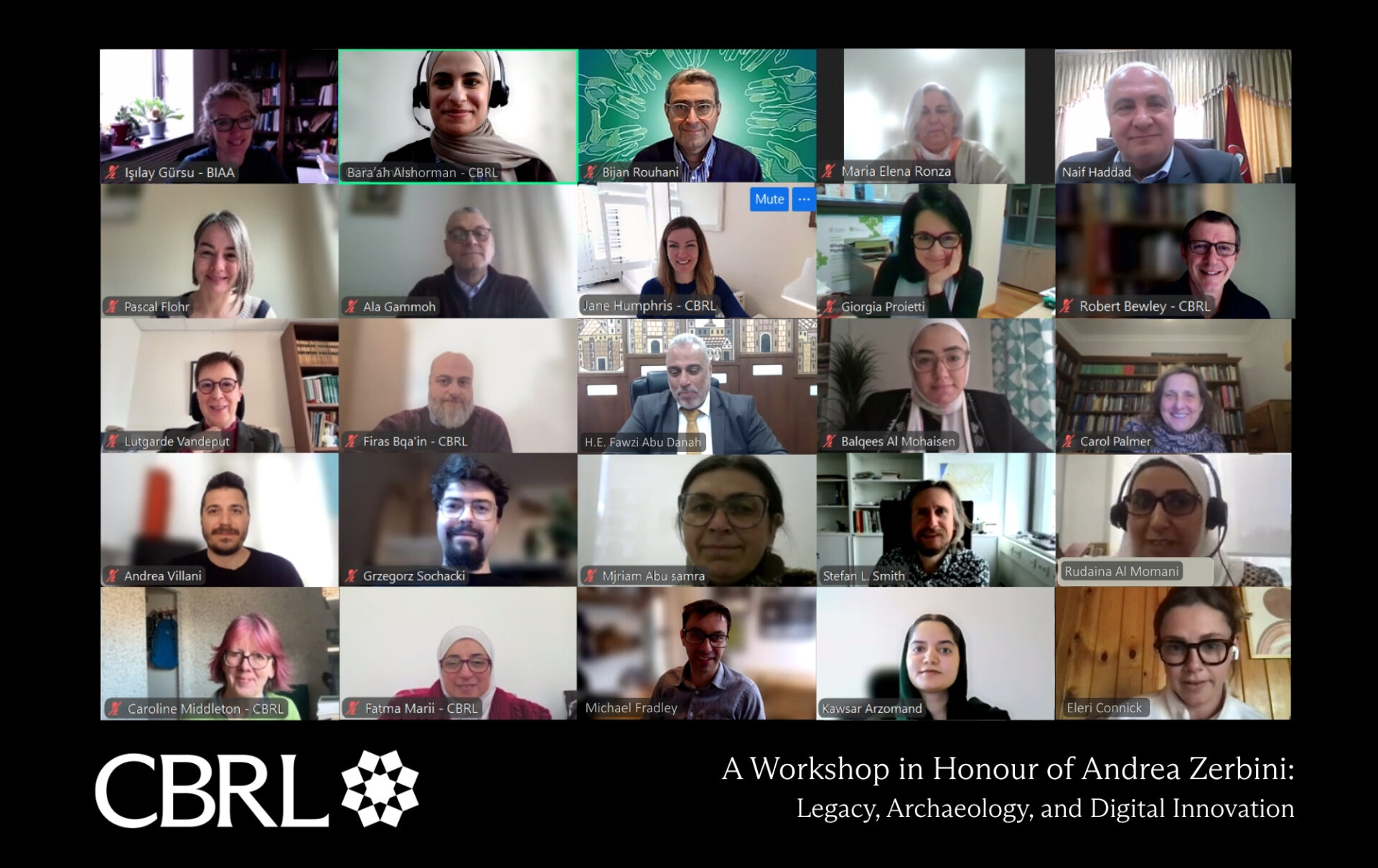
The first session, moderated by Dr Jane Humphris, focused on Andrea’s research contributions. Prof. Robert Bewley (CBRL) and Dr Michael Fradley (University of Oxford) discussed his work in satellite imagery analysis, GIS, database development, and training within the Endangered Archaeology in the Middle East and North Africa (EAMENA) project. Pascal Flohr (Leiden University Libraries) presented the MaDiH project, exploring methodologies and outcomes in mapping digital cultural heritage in Jordan. The session concluded with an engaging discussion among speakers and participants.
In the afternoon, the second session, moderated by Dr Carol Palmer, explored Digital Horizons in Levantine Archaeology with three Andrea Zerbini Award holders. Andrea Villiani (Zerbini Award Holder 2023–2024) presented research on documenting abandoned villages in rural Cyprus. Grzegorz Sochacki (Zerbini Award Holder 2025–2026) discussed satellite imagery and survey methods in reconstructing Jordan’s agricultural landscapes. Eleri Connick (University of Amsterdam, Zerbini Award Holder 2023–2024) shared insights into methodological experimentation in her research in Jordan.
The day ended with reflections on the future of the Andrea Zerbini Foundation by Giorgia Proietti and Dr Jane Humphris.
Day 2 – 31 March 2026: AI, Heritage, and Future Directions
The second day focused on the future of digital archaeology, artificial intelligence, and collaborative research practices.
The third session, moderated by Dr Bijan Rouhani, addressed AI and Heritage: Transforming Learning and Engagement. Prof. Naif Haddad (Hashemite University) explored virtual reconstruction and digital gaming in cultural heritage. Kawsar Arzomand (Brunel University London) examined AI applications in reconstructing heritage sites from Bamiyan to Palmyra. A joint presentation by Prof. Lutgarde Vandeput and Dr Işılay Gürsu (British Institute at Ankara) highlighted the Pisidia Heritage Trail, demonstrating the integration of archaeology and virtual reality.
The fourth session, moderated by Prof. Robert Bewley, focused on AI in Museums, Exhibitions, and Community Interpretation. Arch. Balqees Al Mohaisen discussed enhancing museum experiences through AI, while Eng. Ala Gammoh (Al-Hussein Technical University) presented on AI in teaching architectural history. Maria Elena Ronza (SELA) addressed how digital heritage and AI can inspire youth engagement. The session concluded with an interactive discussion.
In the final session, moderated by Dr Jane Humphris, Dr Bijan Rouhani examined the ethical dimensions of AI in heritage, emphasising the importance of critical reflection. Caroline Middleton (Editor of Levant) followed with an editorial session outlining plans for publication, including peer review processes and thematic directions.
Closing Remarks
Dr Jane Humphris concluded the workshop and thanked all the participants and contributors, and emphasised the importance of continuing collective efforts to preserve and advance the academic and professional legacy of Andrea Zerbini.
CBRL is committed to honouring the legacy of Dr Andrea de Silva Zerbini by continuing the work he championed in digital archaeology and cultural heritage protection across the Levant. His innovative spirit and dedication remain central to our mission, inspiring ongoing research, collaboration, and training. We will continue to build on his vision, ensuring that his contribution to the field lives on through our collective work and in future generations of scholars.