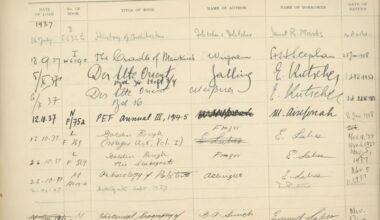


On 30 August 2026, the CBRL Kenyon Institute was delighted to welcome Yuli Gekht, Assistant Director of the W. F. Albright Institute of Archaeological Research, and Alejandra Sanchez, Project Conservator, for a professional visit focused on the condition, preservation, and conservation needs of the Institute’s library and archival collections.
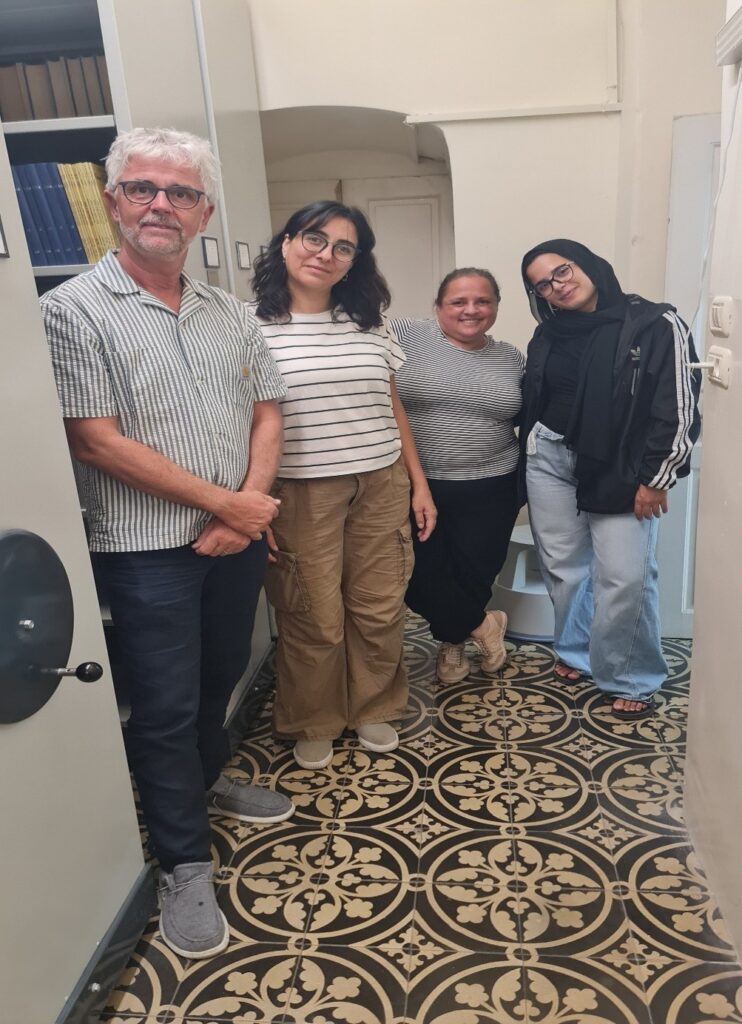
The visit provided an important opportunity to strengthen the longstanding relationship between the two institutions and to exchange professional knowledge and experience. Ruba Shweiki, Librarian, introduced the KI Library and its collections. Qasem Abu Harb, Senior Archivist, presented the archival collections, their historical significance, and the Institute’s ongoing work in documentation, preservation, and digitisation.
A key part of the visit was the discussion between Qasem Abu Harb and Alejandra Sanchez on the physical condition of the KI archival collections. They considered the condition of different types of archival materials, the main preservation risks and conservation concerns, and appropriate approaches to storage, handling, and preventive conservation. The discussion also explored how condition assessment can be integrated into KI’s ongoing inventory, documentation, preservation, and digitisation work, helping to establish practical priorities for the long-term care of the collections.
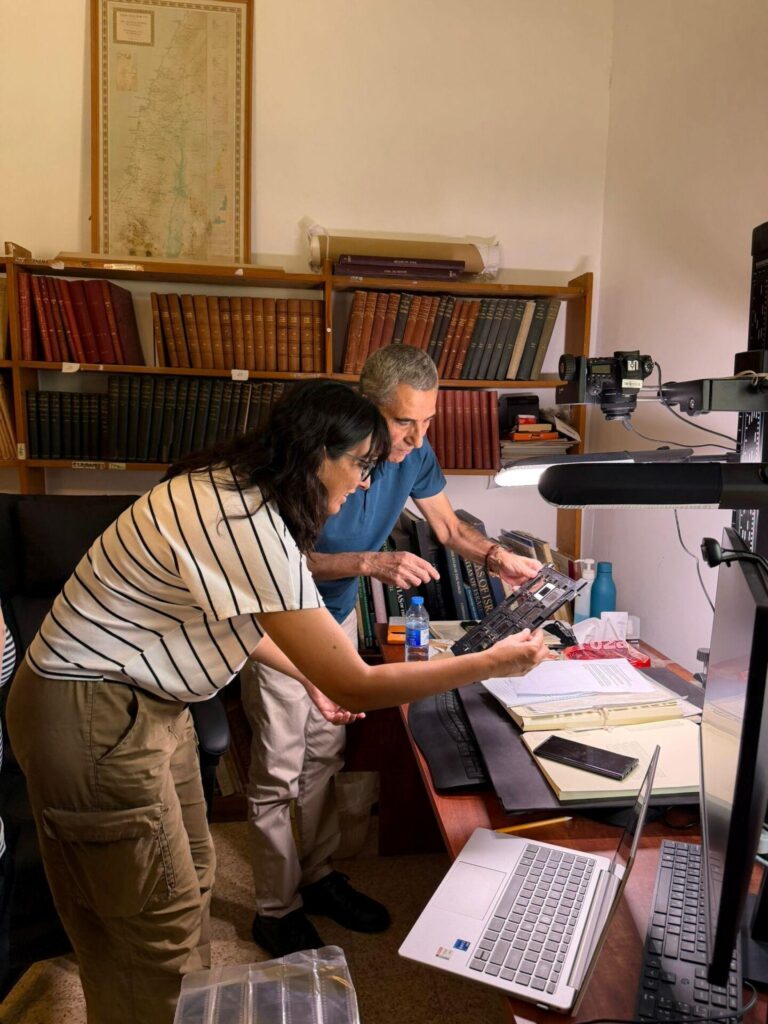
Alejandra shared her professional expertise by assessing selected materials and offering practical guidance on preventive conservation, storage conditions, handling, environmental considerations, and priorities for future conservation treatment. The exchange was especially valuable because it connected archival management with conservation practice and helped identify practical measures through which KI can strengthen the long-term preservation of its unique collections.

We greatly appreciate Alejandra Sanchez’s valuable professional assessment, diagnosis, and guidance, which will help inform the Institute’s continuing work to safeguard its archival heritage. We also thank Yuli Gekht for her visit and for contributing to the continued professional relationship and exchange between the two institutions.
This contemporary professional exchange gains added significance when seen against the long history of cooperation between the two institutions and their predecessors.
A Shared History of Archaeology and Professional Exchange
The significance of this visit is rooted in a relationship between the institutions’ predecessors that extends back more than a century. In the early 1920s, the British School of Archaeology in Jerusalem, the predecessor of the Kenyon Institute, and the American School of Oriental Research (ASOR), the predecessor of the Albright Institute, were closely connected through the Way House in Jerusalem. The Way House served as the home of the British School, while ASOR temporarily housed its library and offices there.

This early connection helped establish a lasting tradition of academic and professional exchange between the British and American archaeological communities in Jerusalem. Over the following decades, this relationship was strengthened through archaeological research, fieldwork, and scholarly cooperation.
One of the most significant examples of this cooperation was Kathleen M. Kenyon’s excavation of Tell es-Sultan at Jericho between 1952 and 1958. Kenyon worked within the close network of British and American archaeological institutions in Jerusalem, and A. Douglas (Doug) Tushingham, who was associated with ASOR, worked with Kenyon at Jericho. Their collaboration represents an important chapter in the history of archaeological cooperation between the two institutions and their scholars.
Over more than 100 years, the relationship has evolved from shared premises and archaeological fieldwork to wider cooperation in research, libraries, archives, conservation, and heritage preservation.
In this context, the visit of Yuli Gekht and Alejandra Sanchez to the Kenyon Institute represents both a continuation of this shared history and a new chapter in professional cooperation. The exchange between Qasem and Alejandra shows how a longstanding institutional relationship continues to develop through the sharing of professional knowledge and practical expertise, particularly in the preservation of collections that document the history of archaeological research in Jerusalem and the wider region.
The Kenyon Institute greatly values its longstanding relationship with the Albright Institute and looks forward to continuing this tradition of professional exchange, collaboration, and shared commitment to preserving and making accessible the region’s archaeological, documentary, and scholarly heritage.