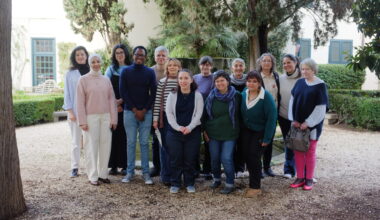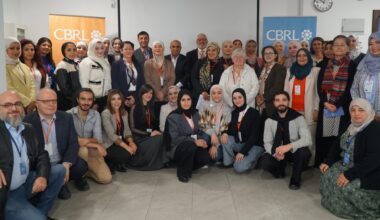


CBRL supported the University of Jordan, in collaboration with the University of Bristol, to deliver the Early Career Researcher Networking Workshop: Research Priorities for the Role of Pharmacists and Regulatory Processes in Substance Use Disorders in Jordan at the CBRL Amman Institute on 7 July 2026.
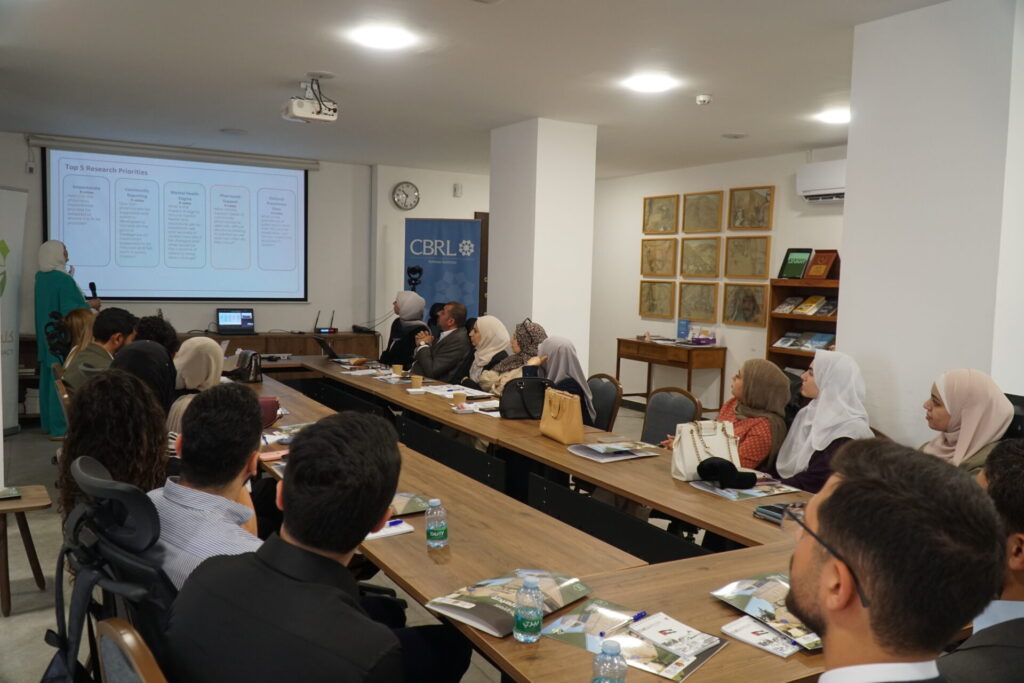
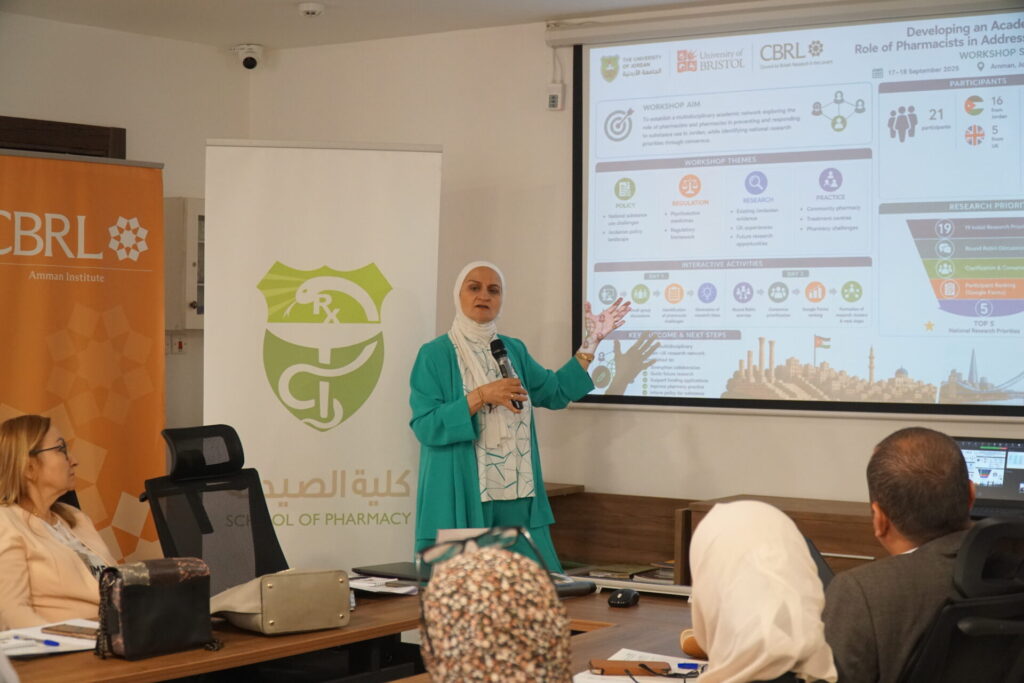
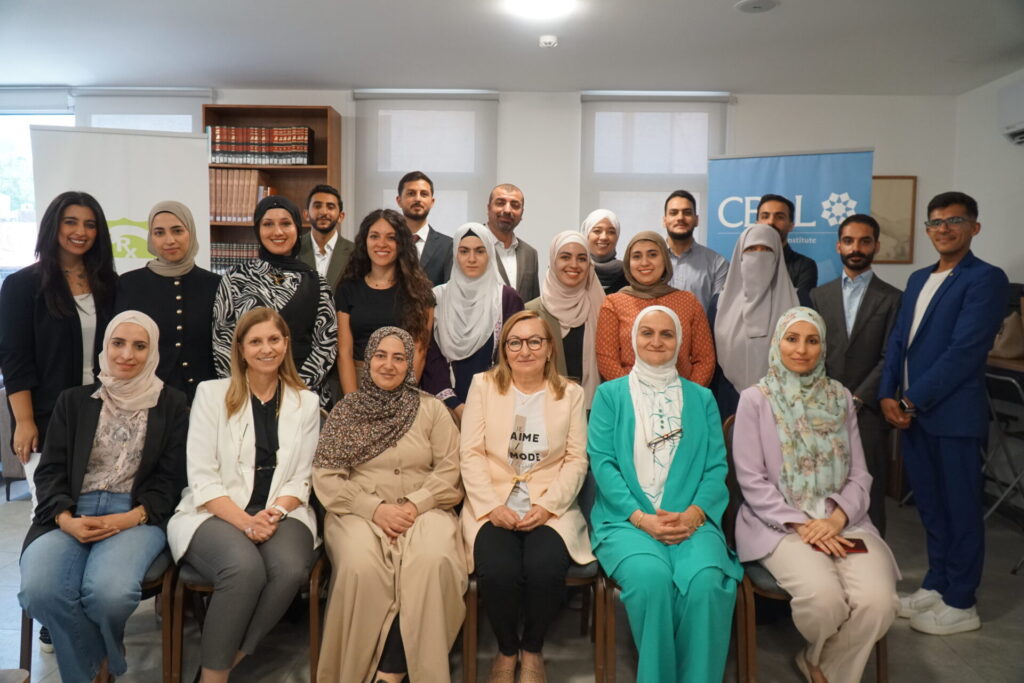
The one-day workshop brought together researchers, healthcare practitioners, and policymakers from Jordan and the UK to advance collaborative research on substances. The workshop was led by Dr Jenny Scott (Bristol Medical School, University of Bristol, UK), Dr Roz Gittins (College of Mental Health Pharmacy, UK), Prof. Mayyada Wazaify (School of Pharmacy, University of Jordan), and Dr Haya Yasin (School of Pharmacy, Middle East University, Jordan). Participants included researchers from Jordan and the UK, Jordanian policymakers and regulators, practising pharmacists, and other local experts.
The workshop put early-career researchers at the centre of the initiative and marked the next phase of the partnership by moving from identifying research priorities to developing a focused and collaborative research agenda. Discussions aimed to build capacity, strengthen partnerships, and support the development of evidence-based research addressing the role of pharmacists and regulatory processes in substance use disorders in Jordan.
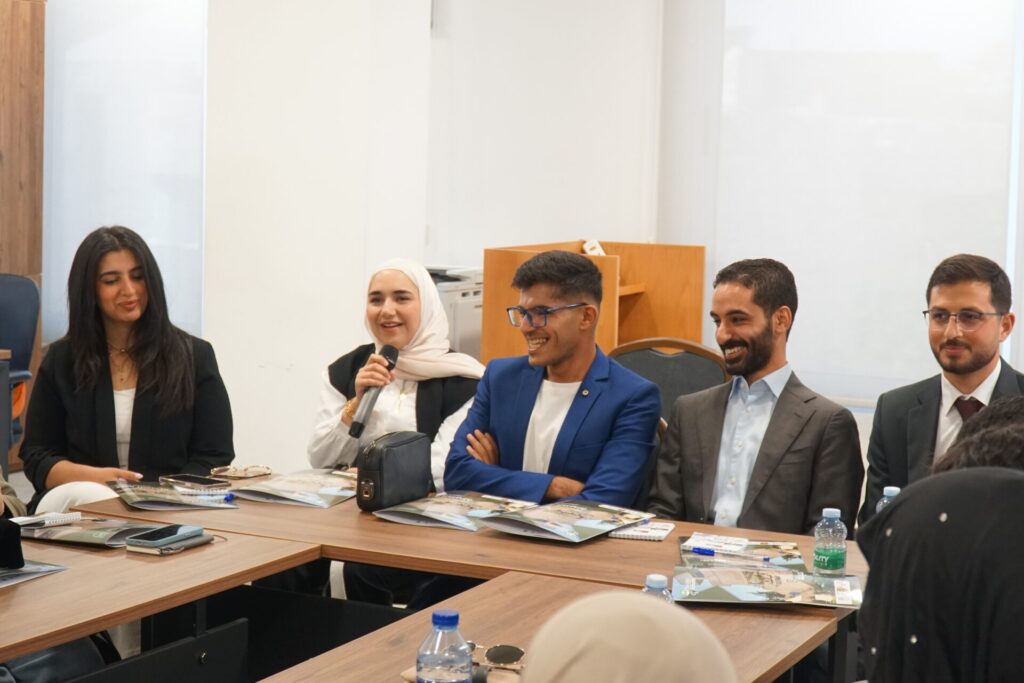
The workshop opened with reflections on the outcomes of the September 2025 workshop, followed by an update on the evolving regulatory and practice landscape surrounding prescription and over-the-counter medication misuse in Jordan. Participants revisited the five research priorities identified during the previous workshop and discussed potential areas for further investigation before voting on a priority area to take forward.
During the second session, participants worked together through discussion with in-person and virtual participants from Jordan and the UK to define a research question, explore suitable research methods, and identify the training and support needs of early-career researchers. The session provided an opportunity for participants from different backgrounds and disciplines to exchange perspectives and shape the next steps of the research collaboration.
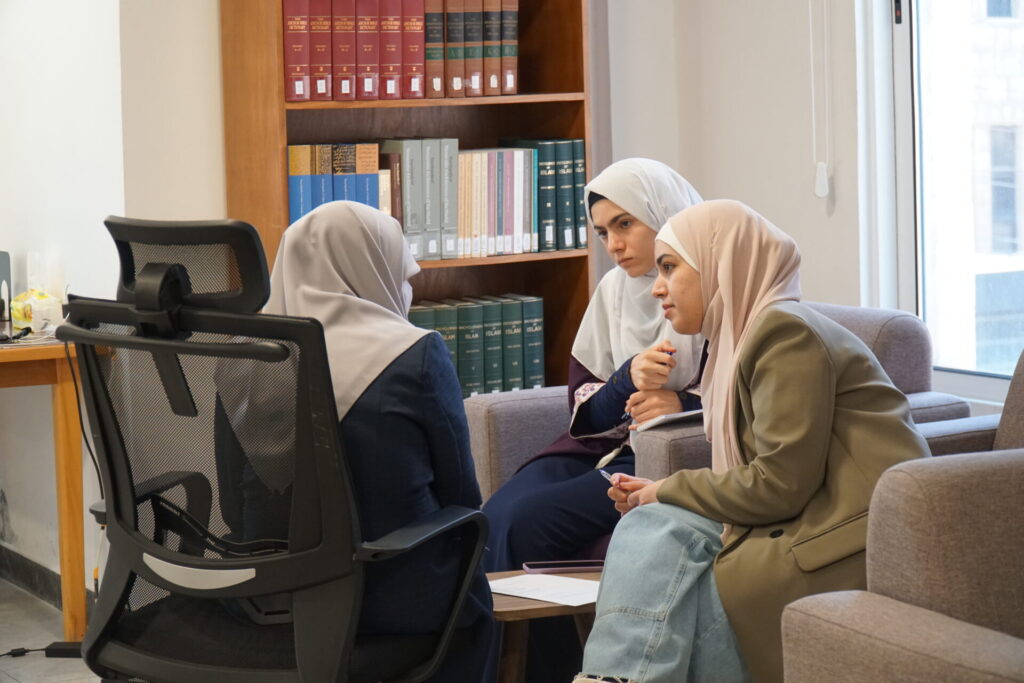
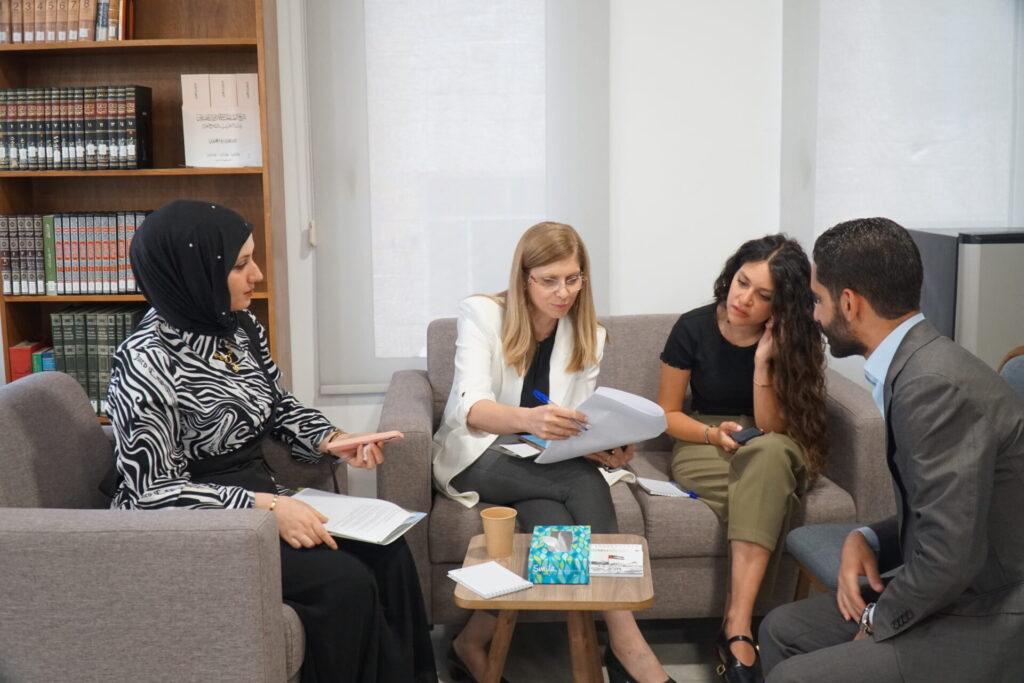
The afternoon session focused on strengthening research capacity among early-career researchers. Participants explored global health research funding opportunities, received practical guidance on writing competitive research proposals, and discussed what funders look for when assessing applications. The focus was on supporting emerging researchers in developing the skills needed to pursue future collaborative research opportunities.
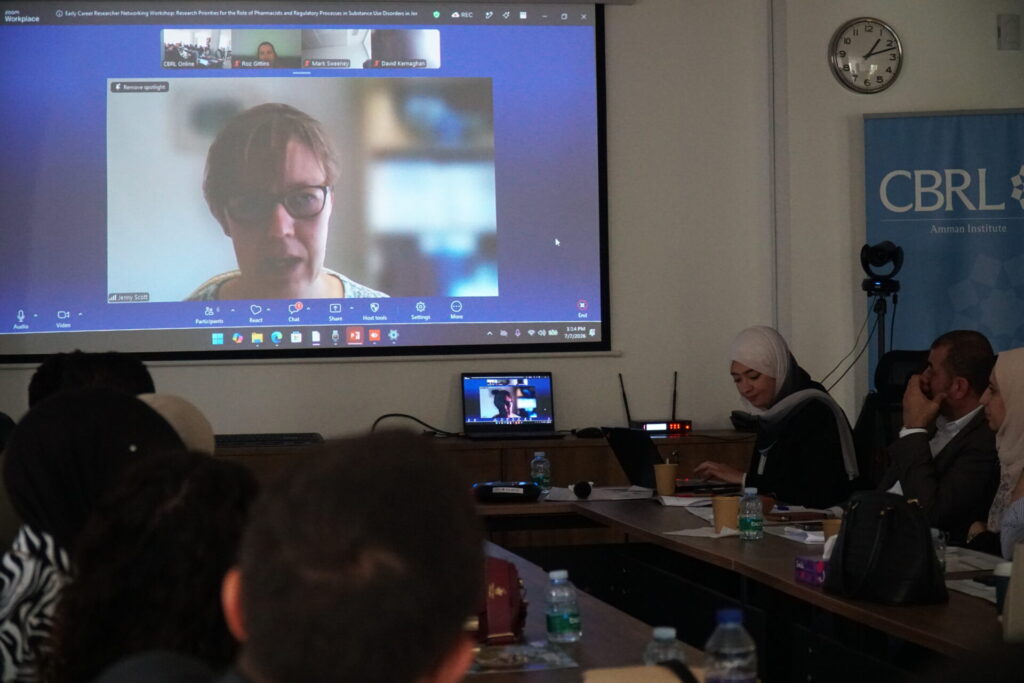
The workshop concluded with a discussion of the next steps for the network. Building on the foundations established in 2025, participants reaffirmed their commitment to developing collaborative research that can inform policy, practice, and future approaches to addressing substance use disorders in Jordan.
The five research priorities identified during the September 2025 workshop were:
- How can the pharmacy inspectorate process be adapted to ensure it is fit for purpose?
- How can the pharmacy profession be supported and systems developed to harness on-the-ground intelligence on medication suspected to be misused and feed this back to policymakers?
- What is the impact of stigma around mental health and substance use on substance use and recovery in Jordan, how can it be changed, and what would be the outcome of efforts to bring about change?
- What are the support needs of community pharmacists to deal with difficult situations relating to substance use, and how often do they occur?
- What is the prevalence of prescription and over-the-counter medication use for non-medicinal purposes in Jordan?
Read more about the previous workshop held in September 2025:
https://www.cbrl.ac.uk/news/the-role-of-pharmacists/