

By Giulia Albertazzi, PhD student at the University of Cyprus, specialising in Digital Humanities and Landscape Archaeology.
My doctoral research on the relationship between human communities and freshwater in Cyprus marks the culmination of more than ten years of fieldwork and engagement with the island—an island that has become an integral part of my identity.
I have long been interested in how prehistoric and protohistoric communities in Cyprus negotiated their relationships with natural resources and with the natural and social environments in which they lived. Traditionally, interpretations of Cypriot landscapes—particularly from the Bronze Age onwards – have largely revolved around the exploitation of the island’s rich copper deposits. This focus has often overshadowed other crucial resources. In order to address this imbalance I developed my research project around on one of the island’s most precious yet unpredictable resources: freshwater.
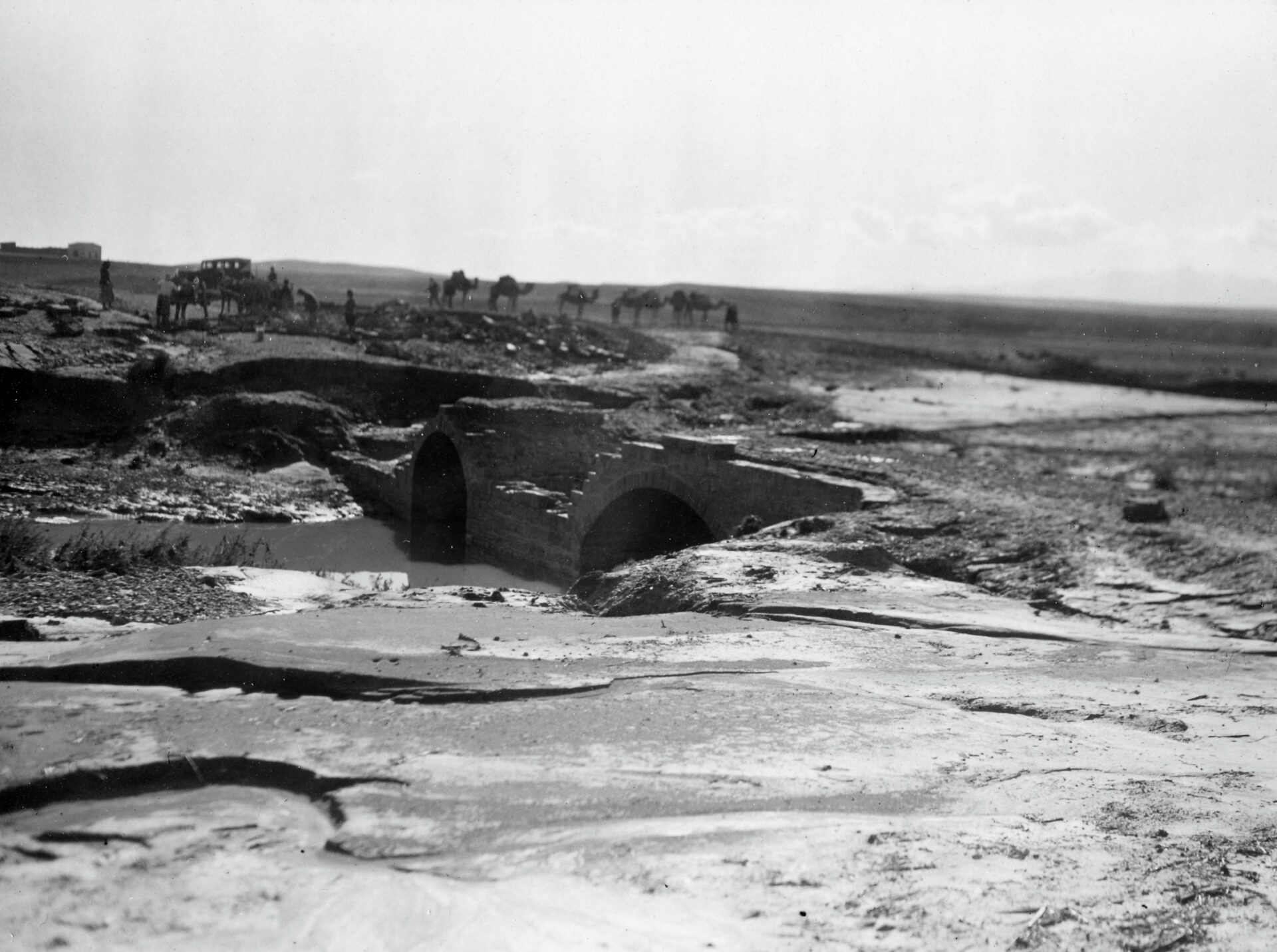
Cyprus is characterised by a semi-arid climate and has experienced cyclical and increasingly severe droughts, with prolonged aridity phases (lasting 2–6 years) occurring roughly every 70–100 years. Although water has played a subtle yet pivotal role in discussions of prehistoric settlement strategies in Cyprus, viewed as shaping patterns of settlement, mobility, and land use, its importance has largely remained peripheral within scholarly debate. Water is most often discussed in terms of the strategic importance of major river valleys as catalysts for regional organisation, inter-site connectivity, and resource procurement. Broader studies addressing the socio-cultural, productive, and geopolitical dimensions of water are still rare. A diachronic, island-wide analysis of the relationship between hydrology, water management, and socio-economic development remains notably lacking. When water-related topics are discussed, they are frequently constrained by narrow chronological, thematic, or geographical scopes.
For these reasons, the main goal of my research project is to bring this essential resource to the forefront, exploring freshwater from multiple angles and perspectives. My research centres on five interrelated dimensions of the human–water relationship:
- Territorial connectivity and settlement patterns;
- Water supply strategies;
- Water optimisation technologies;
- Water in productive activities;
- Social and cultural roles of water.
To explore these themes, the project combines palaeoenvironmental records, archaeological data, hydrogeological information, and archival sources. Together, these provide a nuanced understanding of how freshwater resources shaped the lives of ancient Cypriot communities over time. To capture the social and other intangible aspects that remain invisible in the archaeological record, I am also collecting oral testimonies from local residents. These narratives provide insights into lived experiences and collective memories surrounding the availability, procurement, consumption, and management of freshwater in traditional Cyprus before the widespread urbanisation and mechanisation that accelerated in the mid-twentieth century.
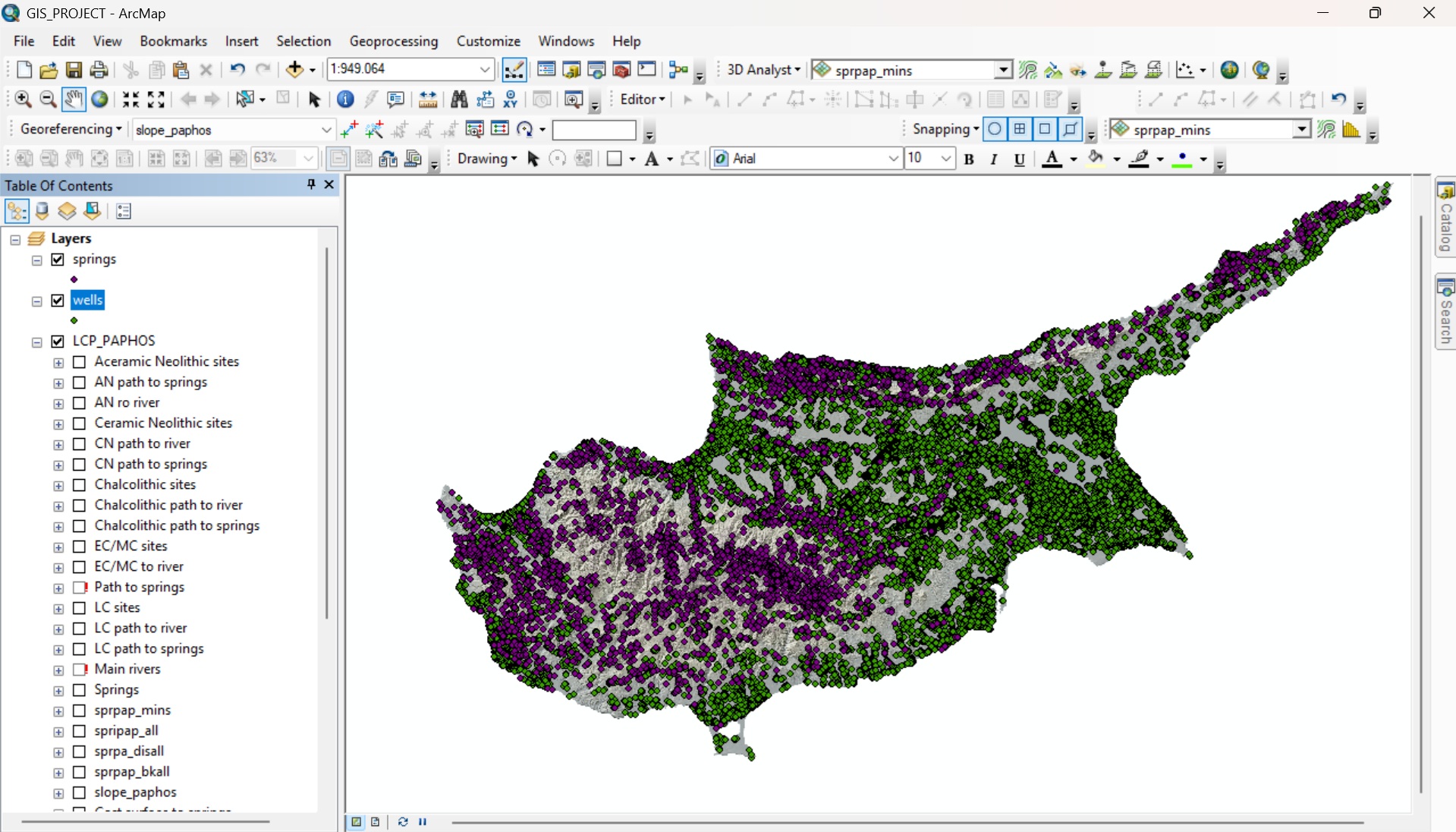
Gathering all this information required periods of extended fieldwork in Cyprus. It was within this framework that I applied for a CBRL Andrea Zerbini Award. The grant enabled me to focus entirely on my research, spending time in Cyprus, accessing institutional datasets (with kind permission), and consulting libraries and the State Archives.
After seven months of research supported by the CBRL Andrea Zerbini Award, I have gathered information on around 1,500 sites and obtained historical data on river courses, springs, and local hydrogeology. This material has allowed me to carry out preliminary spatial analyses, refine my research questions, and establish a solid foundation for future work.
The locations of sites and springs were verified through fieldwork to assess the accuracy of primary sources, and thanks to this exploratory phase, I was able to further develop my ideas and present them at two conferences held in October: Water, Landscapes and Society in the Past (Barcelona, Spain) and PoCA (Postgraduate Cypriot Archaeology) (Nicosia, Cyprus). These events offered excellent opportunities to share my preliminary work with diverse audiences, receive valuable feedback, and refine my research.
In addition, the CBRL Andrea Zerbini Award allowed me to explore a new field of research. I was able to dedicate time to preparing my ethnographic interviews, ensuring they were grounded in a robust theoretical framework. These interviews focus on five main topics—reflecting the dimensions of my research—but participants are also encouraged to share their own insights and stories freely.
This phase of the project has just begun, with seven participants representing three extended families spanning multiple generations. Through their voices, I am exploring how memories of water and landscape are remembered, transmitted, and reimagined over time.
Friends and colleagues have generously opened their homes to me, allowing me to interview their parents, grandparents, and relatives. The memories and experiences they have shared would have been difficult to access otherwise. The warmth and hospitality I have encountered have enriched this research beyond measure, making it a truly unforgettable experience. Conversations often last for hours and open entire worlds of knowledge, transforming my understanding of Cyprus and its people.
Rather than a single island, each story reveals a mosaic of landscapes, practices, and micro-worlds, each with its own cultural heritage, respect, and knowledge of water. As a foreign researcher from a water-rich country, I could never have imagined such deep and varied relationships with water, nor the ways these are unconsciously reflected and embedded in the words, expressions, and feelings Cypriots use when speaking about it.
This remains the most valuable experience of my academic journey so far—not only for its contribution to my research but also for the profound personal growth it has inspired. Thanks to the time spent in Cyprus, supported by the CBRL, I have also been able to build professional networks that will allow me to remain on the island throughout my doctorate—an opportunity that has completely reshaped my research outlook. For all these reasons, I feel profoundly grateful to CBRL and Andrea Zerbini’s family. Without their support, none of this would have been possible, and the development of my project would have been constrained in ways that would have prevented it from growing as it is doing.
Biography:
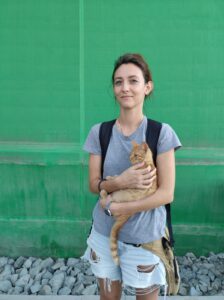
Giulia Albertazzi is a PhD student at the University of Cyprus, specialising in Digital Humanities and Landscape Archaeology. Her research focuses on Cypriot Prehistory and Protohistory, particularly on human–environment interactions and the role of freshwater resources. She has extensive experience in Italy, Cyprus, and Kuwait as a professional field archaeologist, archaeological illustrator, and laboratory technician.
The views expressed by our authors on the CBRL blog are not necessarily endorsed by CBRL but are commended as contributing to public debate.