

By Elizabeth Eastwood Dewing, Winner of the CBRL Undergraduate Dissertation Prize 2025: Levantine Archaeology or History Studies
As a researcher of Israel-Palestine, the weight of language is never far from my mind. With every sentence I write and every word I chose, I am aware that I am placing myself on an intensely politicised spectrum, writing about a region shrouded in linguistic debate.
Israel-Palestine is embedded in British society even as it divides it. The region bequeathed the world the Bible, and with it came narratives that have formed understandings of the world. Arguments have been shaped around which lines are drawn on the map or which people should be granted what land, and entire identities have formed in opposition to those think differently. This is exacerbated by language: ‘Israel’ as in the biblical kingdom, the modern nation state, or both? ‘Palestine’ as in the Old Testament Philistines who were the enemies of the Israelites, or the people who have become symbols of a political identity and the focus of protests across the world? In such an environment, the words used to express these identities and arguments are condensed and language is literalised. The consequence is polarisation.
This division is echoed across major debates today, and the blame is easily often placed at the door of factors such as social media. However, my research has unearthed similar divisions surrounding Palestine and what was referred to as the ‘Jewish problem’ from discussions in nineteenth century Britain. Themes of literalisation, political powerplay and division in discussions surrounding Palestine and the creation of the modern Jewish nation state are detectable long before the creation of a State of Israel.
Ideas of restoring the Jewish people to the region described as the ‘Holy Land’ had been present in fringe religious groups in Britain since the seventeenth century, although they only began to achieve any wider recognition in the mid-nineteenth century. In 1838 Anthony Ashley-Cooper (1801–1885), later the seventh Earl of Shaftesbury, published an article in London’s Quarterly Review. Ostensibly a book review, after the first ten pages the façade drops and the piece becomes a manifesto for Jewish restorationism in Palestine. An ardent Evangelical Christian, Shaftesbury’s life was built around his faith. Throughout his long parliamentary career he never held a position in government as he refused to jeopardise his morals for party loyalty. He read the Bible with a fervent literalism and took the prophetic imagery of the Book of Revelation as undisputable truth.
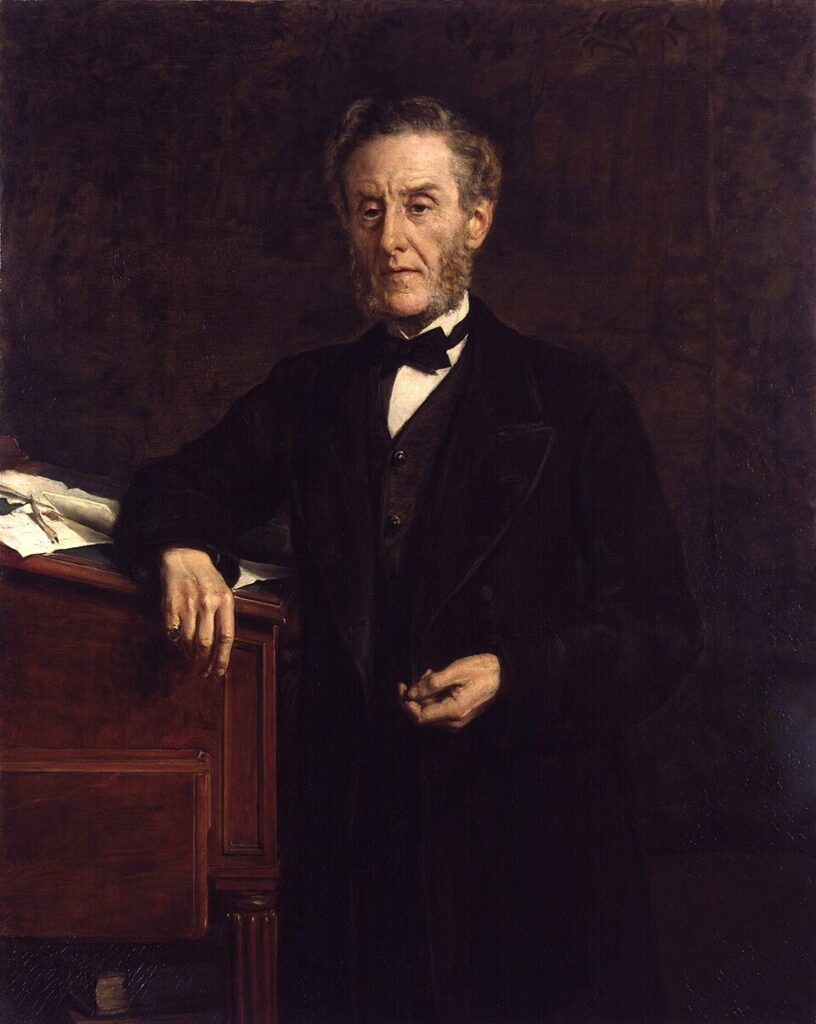
In the presentation of the world Shaftesbury projects through this article, the population is divided into two: those of ‘Gentiles’ and ‘Jews’. The piece is littered with antisemitism, but this is given in the same breath as Shaftesbury describes them as the ‘claimant’ of a divine claim to ‘the enjoyment and rule of this ancient… on a prescription that transcends all history’ (p.176). [AR1.1]Even as the Jewish people are ‘despised and degraded’ in Europe, they still hold the divine title deeds to Palestine (p.180). Shaftesbury understands himself as living in times of prophetic fulfilment and Jewish restoration to the Holy Land, [AR2.1]as foretold in the Bible, would only be confirming this fact.
For a modern reader such biblically-loaded language in a secular space is striking, and although such vocabulary was comparatively commonplace amongst Shaftesbury’s contemporaries, Shaftesbury’s language would have still set peoples’ antennae on alert. Eitan Bar-Yosef argues that, until the 1880s at least, Jewish restoration was a deeply controversial topic and remained outside of the political, cultural and religious zeitgeist of Victorian Britain. It was too extreme, caught up in prophetic language and presented by people seen as ‘enthusiastic, extravagant, exaggerated’ and ‘mad’.
But Shaftesbury was a skilled political communicator. His literal translation of prophetic passages remains at the centre of his argument, but he carefully masked it within other more politically palatable and (apparently) plausible proposals. Through tuning into wider political narratives including claiming that Britian’s prosperity was due to its acceptance of Jews in its shores, and that Jewish restoration was a natural succession to the rule of Muhammad Ali in the region of Greater Syria (a much-hated figure in Britain), Shaftesbury smoothed the corners of his message.
The success of this is traceable: two years later, when violence against Damascus’s Jewish community elicited outrage from the British public, an article in The Times pulled up Shaftesbury’s argument for Jewish restoration to Palestine as a valid proposal to prevent such an event ever happening again. When originally written, Shaftesbury’s proposal was far too prophetically based and biblically literal to be allowed within the realm of societal acceptability. But with his careful inclusion of acceptable language, it began to creep into the sphere of tolerability.
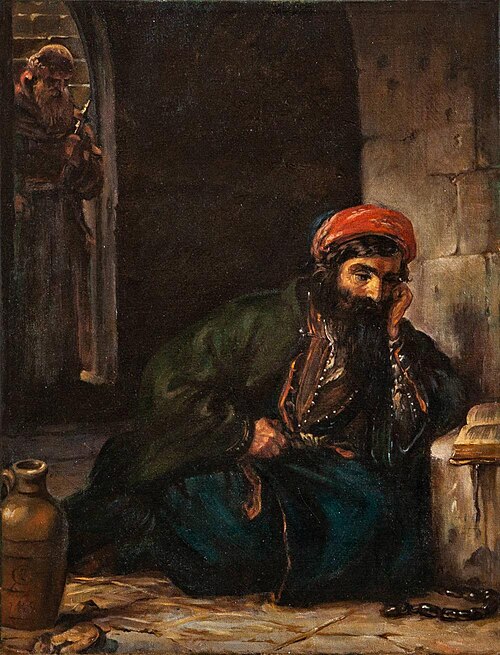
For the last two centuries, we have lived in Shaftesbury’s legacy; biblical narratives and justifications surrounding what became the Israel-Palestine issue have been largely sidelined in mainstream discourse in favour of the apparently rational politics, economics, and international relations. But in the last few years there has been a reverse of this balancing act between acceptability and fervour. Often in discussions, the names of ‘Israel’ and ‘Palestine’ might as well be replaced with ‘the State of Good’ and the ‘the non-State of Evil’ (to be applied according to political leaning). The Dictionary of Controversy can also now be expanded to include words such as ‘genocide’, ‘massacre’, ‘Zionism’, ‘intifada’ and ‘terrorist’. These words have become political dynamite and subjects of debate completely independent of the events they attempt to describe. Furthermore, with the increasing prominence of far-right Christianity, this language is also taking on a religious dimension. In the ‘Unite the Kingdom’ marches in May, the usual Union Jacks, St George’s flags, and a smattering of the Israeli Star of David, were also accompanied by wooden crosses and chants of “Christ is King”.
This is not an interpretation of the Bible or Jesus endorsed by any institutional Churches, including Shaftesbury’s own Church of England; a strong paternalist and ardent campaigner for those at the bottom of society, Shaftesbury himself would also have been deeply disapproving of such a use of language. What we are seeing is the reversal of what Shaftesbury began. Shaftesbury conveyed a controversial religious idea by wrapping it a sheen of political acceptability. Today, the gloves are off. The film of acceptability is gone. When it comes to Western impressions of the Levant, biblically charged language has never been more alive.
Biography
Elizabeth Eastwood Dewing is a MA (Research) in Philosophy candidate at the University of Leeds. Her research explores nineteenth-century British theological perceptions of Palestine and the rise of proto-Christian Zionism. Her undergraduate dissertation, also from the University of Leeds, was awarded the 2026 CBRL prize for a dissertation relating to Levantine archaeology/history.
Blog images from wikicommons / Bio image: Elizabeth Eastwood Dewing

The views expressed by our authors on the CBRL blog are not necessarily endorsed by CBRL but are commended as contributing to public debate.
Bibliography
Bar-Yosef, Eitan, ‘Christian Zionism and Victorian Culture’, Israel Studies, 8.2 (2003), pp. 18–44
Maqbool, Aleem, and Catherine Wyatt, ‘Why Tommy Robinson Supporters Are Turning to Christianity’, BBC News, 23 November 2025 <https://www.bbc.co.uk/news/articles/cy4p42kydx9o> [accessed 10 June 2026]
McKelvie, Geraldine, ‘Tommy Robinson Tells Tens of Thousands at London Rally to Prepare for “Battle of Britain”’, Politics, The Guardian, 16 May 2026 <https://www.theguardian.com/politics/2026/may/16/tommy-robinson-tells-tens-of-thousands-at-london-rally-to-prepare-for-battle-of-britain> [accessed 10 June 2026]
Mullally, Sarah, ‘Address by The Rt Revd and Rt Hon Dame Sarah Mullally as Archbishop-Designate’, Address, 3 October 2025 <https://www.archbishopofcanterbury.org/speeches/address-rt-revd-and-rt-hon-dame-sarah-mullally-archbishop-designate> [accessed 10 June 2026]
Shaftesbury, Anthony Ashley-Cooper, ‘ART. VII.-Letters on Egypt, Edom, and the Holy Land.’, The Quarterly Review (London, United Kingdom), 63.125 (1839), pp. 166–92
‘We Devote Several Columns This Day to Various’, The Times, 26 August 1840, p. 4, The Times Digital Archive