




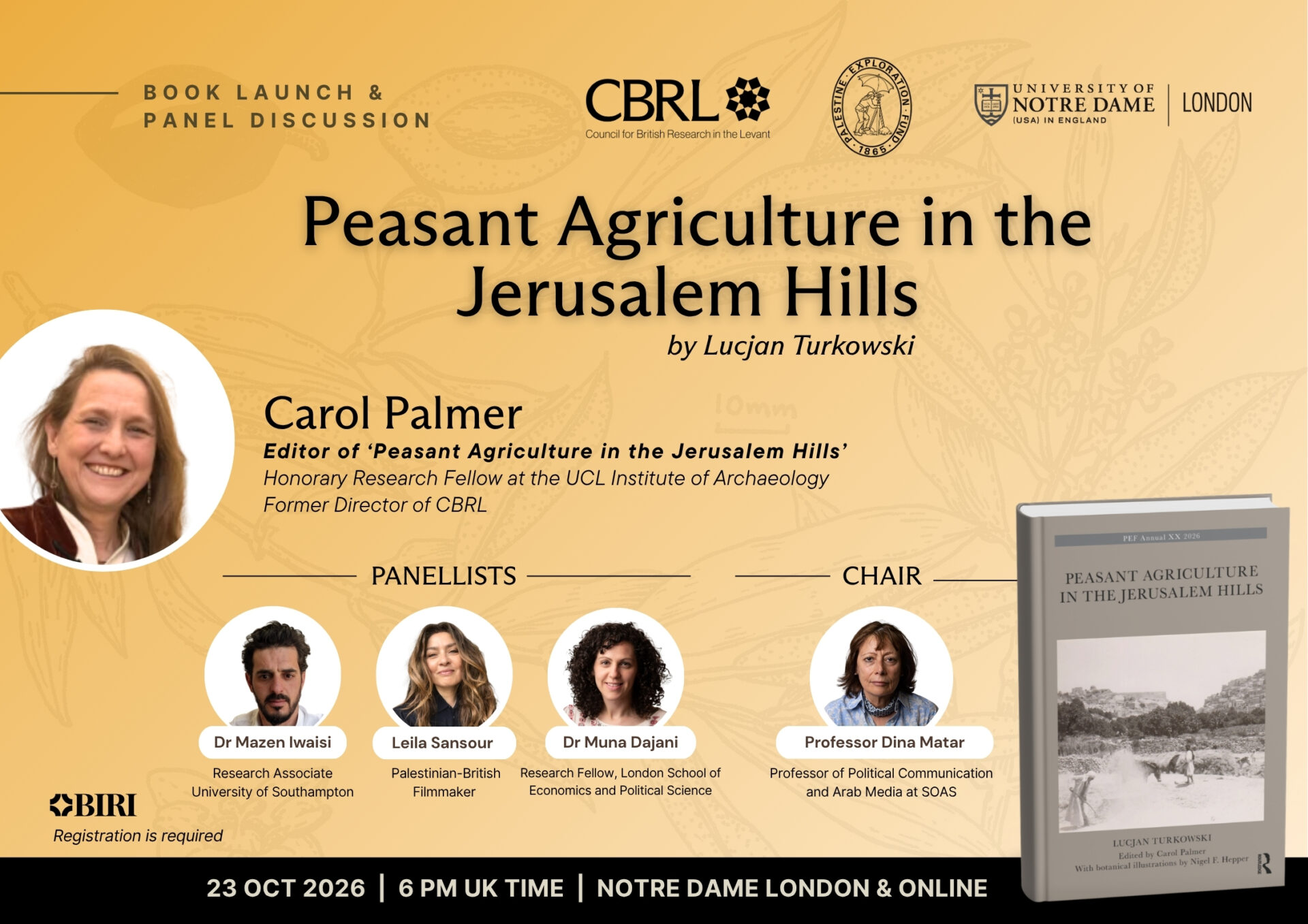
CBRL and the Palestine Exploration Fund (PEF) are pleased to invite you to the book launch and panel discussion of:
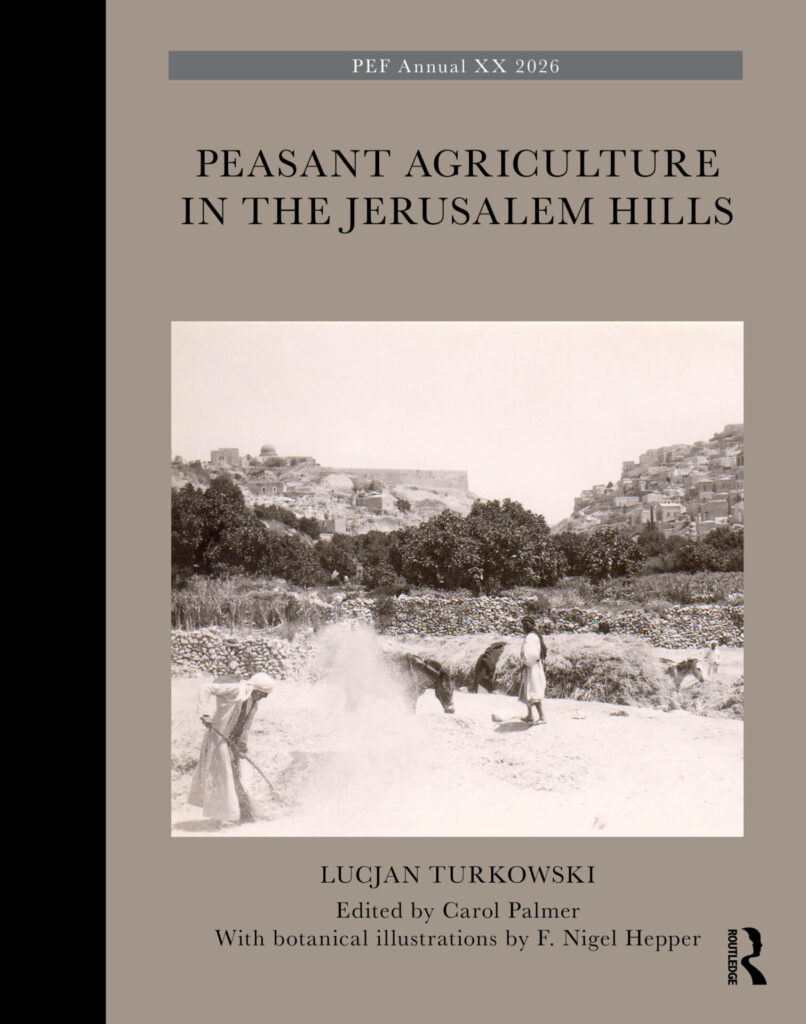
Peasant Agriculture in the Jerusalem Hills
by Lucjan Turkowski
edited by Carol Palmer
Event Details:
- 23 October 2026
- 6 PM UK Time (doors open at 5.30 PM for in-person event)
- University of Notre Dame, London and Online via Zoom
Registration:
About the Event:
Peasant Agriculture in the Jerusalem Hills presents Lucjan Turkowski’s research on Palestinian fellahin (peasant farmers) in the Jerusalem hills during the final years of the British Mandate. With remarkable attention to detail, he documents agricultural practices, animal management, craft production, local knowledge and the material culture of rural communities around Jerusalem.
Turkowski’s attention extended from the names and origins of plants and farming techniques to tools, recipes and patterns of exchange with Jerusalem. Through these details, he captures the knowledge, skills and relationships that sustained rural Palestinian society.
The volume also includes botanical illustrations by F. Nigel Hepper, presented alongside Turkowski’s writings, drawings, collected photographs and field observations.
Yet this is more than a record of rural life. It is also the story of a manuscript and of an academic in exile whose fascination with peasant societies produced a remarkable ethnographic study. The result is a richly detailed portrait of Palestinian farming communities at a moment of transition.
Speaker:
Dr Carol Palmer
Dr Carol Palmer, editor of Peasant Agriculture in the Jerusalem Hills and author of its introductory chapters, will present the book, followed by a panel discussion.
Carol Palmer is an Honorary Research Fellow at the UCL Institute of Archaeology and former Director of CBRL. Her research combines interests in rural lifeways, ethnobotany, food and landscape change. Her work on Turkowski’s manuscript recovers and contextualises an exceptional record of Palestinian rural society and the knowledge systems that sustained it.
Chair:
Professor Dina Matar
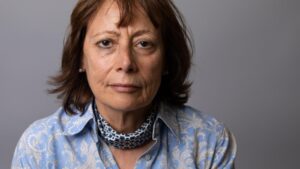
Dina Matar is Professor of Political Communication and Arab Media at SOAS. Her research and teaching are focused on the intersection of politics and communication; media and conflict; cultural politics; diasporas; activist cultures and media and memory studies, focusing on the Middle East and Palestine in particular. Matar is the author of What it Means to be Palestinian: Stories of Palestinian Peoplehood (2010); co-author of The Hizbullah Phenomenon: Politics and Communication (2012); co-editor of Narrating Conflict in the Middle East (2013); Gaza as Metaphor (2016), Producing Palestine (2024) and Archiving Gaza in the Present (2025). She is co-editor of Political Communication in the Middle East and North Africa series and the SOAS Palestine Studies series. Matar has published widely in books and journals. Before joining academia in 2005, Matar worked as a foreign correspondent and editor with international news organisations in the Middle East, London and Hong Kong.
Panellist:
Dr Mazen Iwaisi
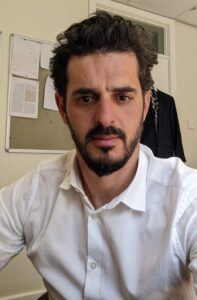
Mazen Iwaisi is currently a Research Associate in the Politics of Sustainability in Heritage at the University of Southampton. He was the Ibrahim Abu-Lughod Fellow at Columbia University in the City of New York for 2025/6. Mazen is working on his first book, titled Anticolonial Archaeology? Epistemic Precarity and Palestinian Archaeology, the proposal for which has been accepted by Stanford University Press. He earned his PhD from Queen’s University Belfast, examining the concept of archaeopolitics in the making of the Palestinian National Spatial Plan (PNSP). Mazen is currently working with Colleen Morgan, Eva Mol (University of York), and other scholars on a project titled Gaza on the Shelf: Palestinian Heritage in Museum Collections, funded by the CBRL Research Grant.
Panellist:
Leila Sansour
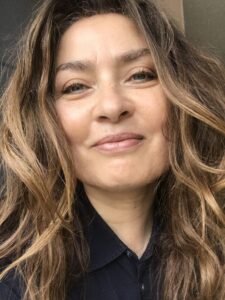
Leila Sansour is a Palestinian-British filmmaker, best known for her documentaries Jeremy Hardy v. The Israeli Army and Open Bethlehem. Both films received theatrical releases across the UK, as well as special screenings at the British Parliament and the U.S. Congress. Her career spans extensive work with ITN News, most recently covering the war on Gaza. Earlier in her career, she served as senior producer on Al Jazeera’s flagship documentary series Encounter in Exile.
Leila is the founder and executive director of Open Bethlehem, a project that uses Bethlehem as a doorway into the wider Palestinian reality and seeks to build international engagement towards a just political resolution. She is also creative director of Planet Bethlehem, an interdisciplinary art and heritage project currently developing a distinctive digital museum for Bethlehem.
Panellist:
Dr Muna Dajani

Muna Dajani is a political ecologist committed to struggles for environmental justice and decolonisation in Palestine and the wider SWANA region. She is a Fellow in Environment at the Department of Geography and Environment, London School of Economics and Political Science. Her work bridges academia and activism, bringing over fifteen years of engaged fieldwork with communities in Palestine, Jordan, and the occupied Syrian Golan Heights. At the heart of her research are the lived experiences of those resisting dispossession and ecological violence, and her scholarship amplifies grassroots knowledges to challenge dominant paradigms of sustainability and development. She is the co-editor of The Untold Story of the Golan Heights (Bloomsbury, 2022) and the author of numerous academic publications and policy briefs that interrogate the entanglements of ecology, power, and colonialism. Her work critically exposes how environmental governance and ‘green’ transitions are mobilized to legitimize settler-colonial agendas, while also offering pathways toward just and decolonial futures.
Publication links:
Event Details:
- 23 October 2026
- 6 PM UK Time (doors open at 5.30 PM for in-person event)
- University of Notre Dame, London and Online via Zoom
Registration:
Images:
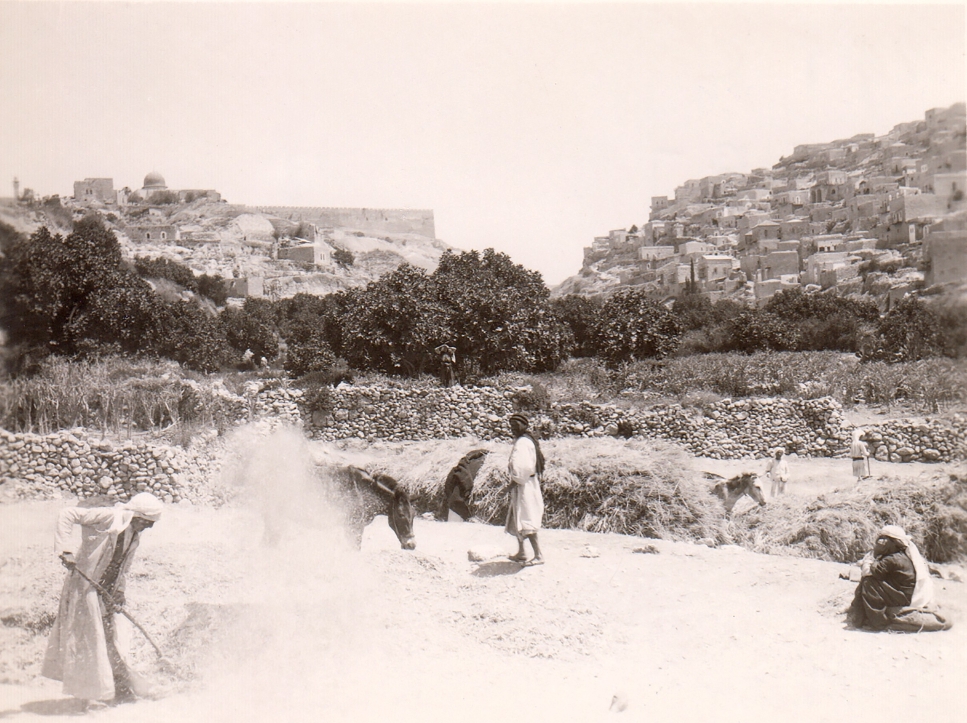
1. Photograph by Khalil Raad, collected by Lucjan Turkowski. Courtesy of the Archives of the Institute of Anthropology and Ethnology, Adam Mickiewicz University, Poznań, Poland.
2. Book cover