

In February 2026, CBRL’s Senior Archivist Qasem Abu Harb participated in an online course “Emergency Response to Documentary Heritage.” The four-day training brought together archivists, librarians, heritage professionals, and funding organisations from across the region to address a pressing question: How can documentary collections be protected during crises?.
The course was delivered with the support and engagement of several leading heritage and funding organisations, including the Egyptian Heritage Rescue Foundation (EHRF), Cultural Emergency Response (CER), the Whiting Foundation, Qatar National Library, the International Council on Archives (ICA), and the Endangered Archives Programme (EAP).
Over four days, the programme covered conceptual discussions and practical technical training. Participants explored methods for assessing risks to documentary collections, developing institutional emergency preparedness plans, and implementing emergency digitisation as a rapid-response preservation tool when collections are under immediate threat.

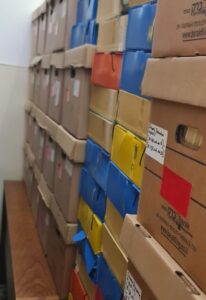
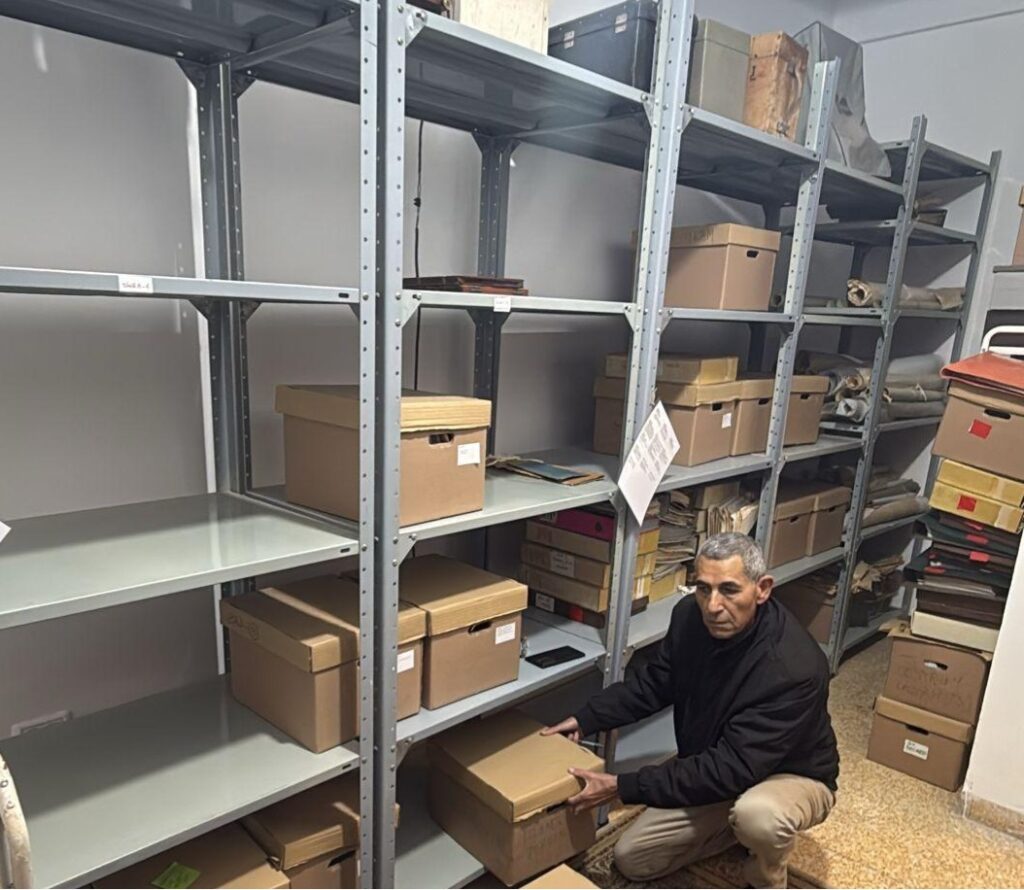
Our Senior Archivist, Qasem Abu Harb, presented the CBRL Kenyon Institute as a case study, and shared practical experiences, highlighting the risks facing documentary collections, operational challenges in unstable environments, and the growing importance of emergency-ready digitisation strategies for protecting vulnerable materials.
The programme included technical sessions about practical solutions for emergency digitisation in resource-constrained environments, and included guidance on suitable hardware and software options, imaging standards, quality control procedures, and post-processing workflows to ensure that digital surrogates created during emergencies remain accessible and sustainable over time.
A particularly valuable part of the course was the dialogue between heritage practitioners and funding organisations on the final day. Participants discussed country-specific challenges affecting documentary heritage and explored how targeted funding mechanisms and partnerships can support institutions in responding quickly when collections are at risk.
For CBRL, participation in the course helped to strengthen internal preparedness and technical capacity. It supported the development of more effective emergency planning, improves digitisation workflows aligned with international standards, and enhanced our ability to design preservation projects that respond to urgent risks.
Key Themes from the Course
- Preparedness through structured planning
- Integrating risk assessment into daily practice
- Digitisation as both emergency response and long-term preservation
- Scalable technologies for crisis contexts
- Maintaining standards and quality under pressure
- Strengthening funding access, partnerships, and regional collaboration
Outcomes
By the end of the course, participants:
- Improved their ability to analyse risks and plan for emergencies.
- Gained foundational and technical knowledge of emergency digitisation workflows.
- Became familiar with systems, tools, and standards.
- Shared regional experiences and made professional connections.
- Engaged directly with funders to discuss practical challenges and opportunities.
This regional initiative reinforced the importance of collaboration and knowledge exchange among institutions facing similar challenges. By building stronger professional networks and shared approaches to risk preparedness, the course is an important step toward protecting documentary heritage under threat and ensuring that these collections remain accessible for future generations.