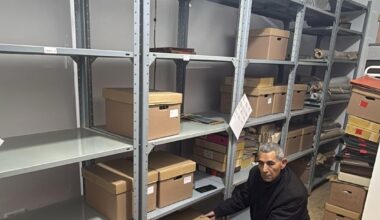


This month, curated by our Senior Archivist Qasem Abu Harb at the Kenyon Institute, we highlight a remarkable historical publication alongside rare excavation photographs from our archive. Together, these materials reveal the ancient history of Jericho and Jerusalem and the evolution of modern archaeological research in the region.
Through print and field documentation, our collection preserves not only the past itself, but also the story of how that past was discovered and recorded.
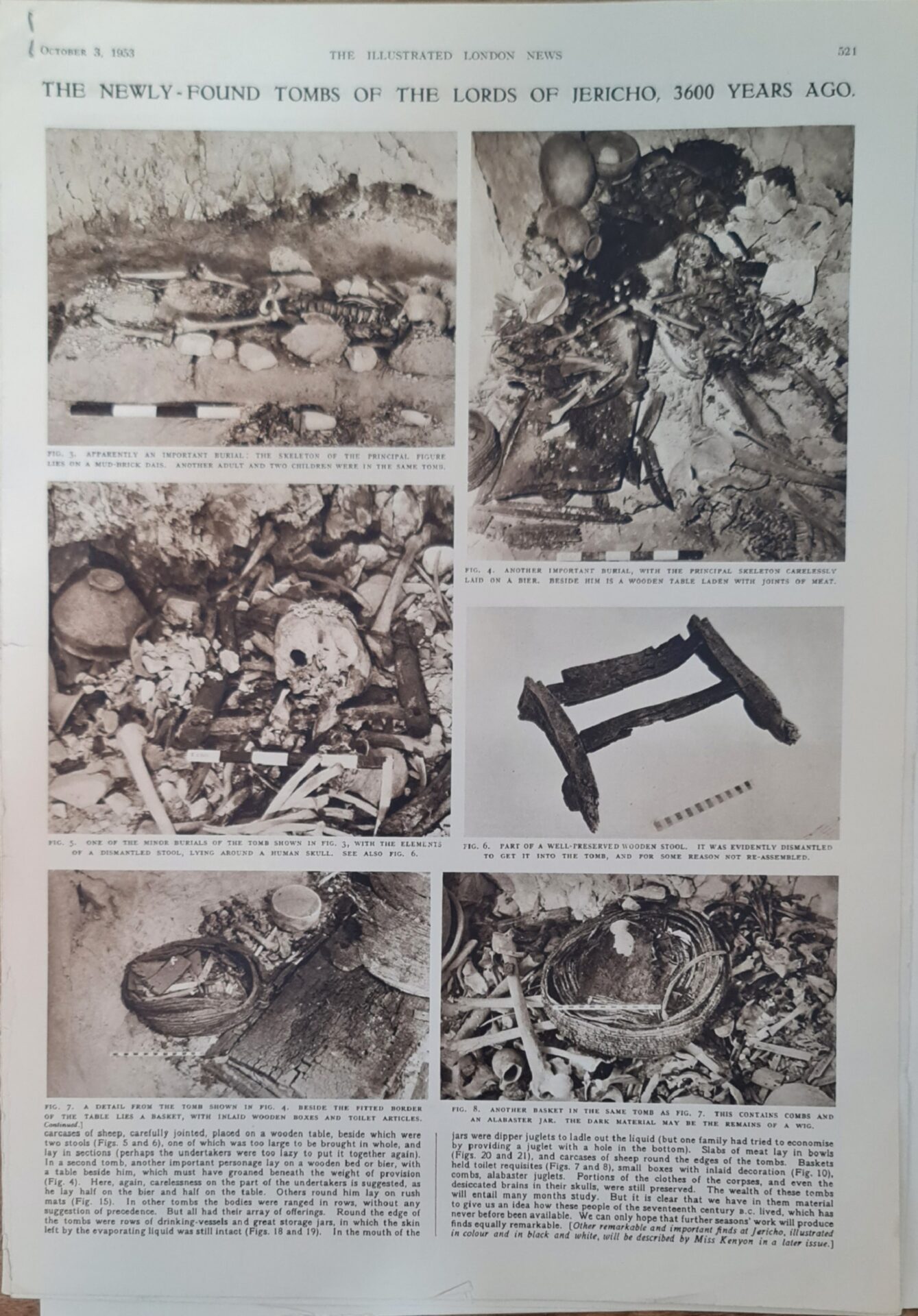
On 3 October 1953, The Illustrated London News published an illustrated report on the discovery of Bronze Age tombs at Jericho, excavated under the direction of Kathleen Kenyon of the British School of Archaeology in Jerusalem. The article brought international attention to the scientific importance of her work, combining vivid images with accessible explanations of the discoveries. It introduced readers to burial chambers containing wooden furniture, baskets, pottery vessels, food offerings, and personal items—finds that revealed social distinction and beliefs surrounding the afterlife in the Middle Bronze Age.
Kathleen Kenyon’s contribution to archaeology was groundbreaking. Her use of rigorous stratigraphic excavation techniques allowed occupation layers to be documented with exceptional clarity. Through her work at Jericho, she demonstrated that the site was not only one of the oldest urban centres in the world, but also a place of complex social organisation. The tombs presented in the 1953 report reflected elite status and domestic life translated into funerary practice, offering rare insight into craftsmanship, daily habits, and ritual traditions of the period.
The publication itself is an important historical artefact. It reflects a moment when archaeological research began reaching a wide public audience through illustrated media, strengthening the relationship between scientific discovery and public knowledge. Today, it stands as a record of both ancient Jericho and the history of archaeological communication.
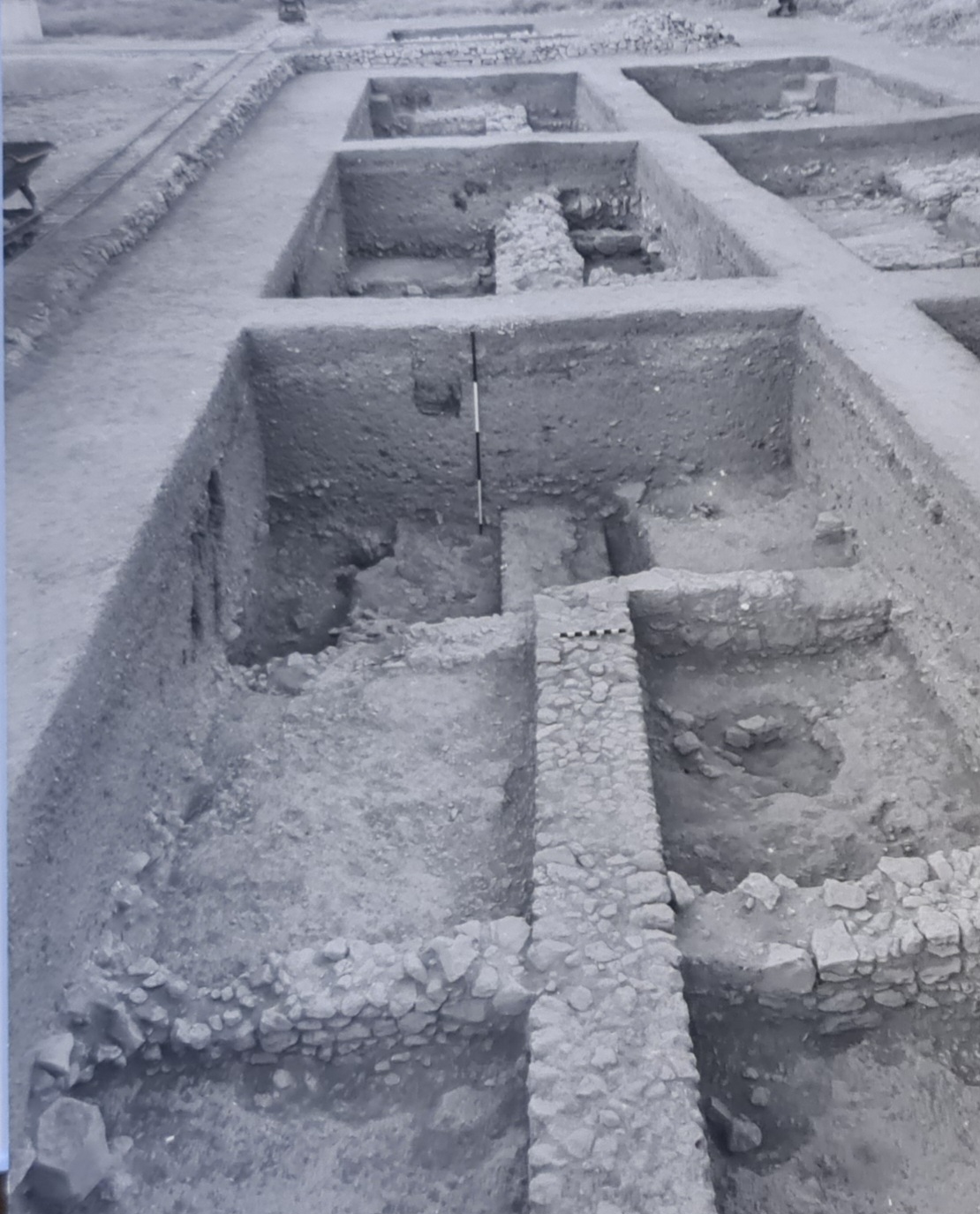
Complementing this publication are two archival excavation photographs from our collection in Jerusalem, which illustrate how similar scientific methods were applied in the field. The first image captures an excavation grid in the Ophel–Silwan area, south of Al-Aqsa Mosque. The square layout, defined by standing sections of earth, reveals deep stratified deposits. Stone walls and architectural remains appear at multiple levels, representing successive phases of settlement.
The principal structures in this area date to the Iron Age (ca. 1000–586 BCE), when Jerusalem expanded as a fortified urban centre with domestic and administrative buildings. Beneath these layers lie remains from the Late Bronze Age (ca. 1550–1200 BCE), indicating earlier Canaanite occupation. The photograph clearly illustrates how the city’s history accumulated vertically, with each era building upon what came before.
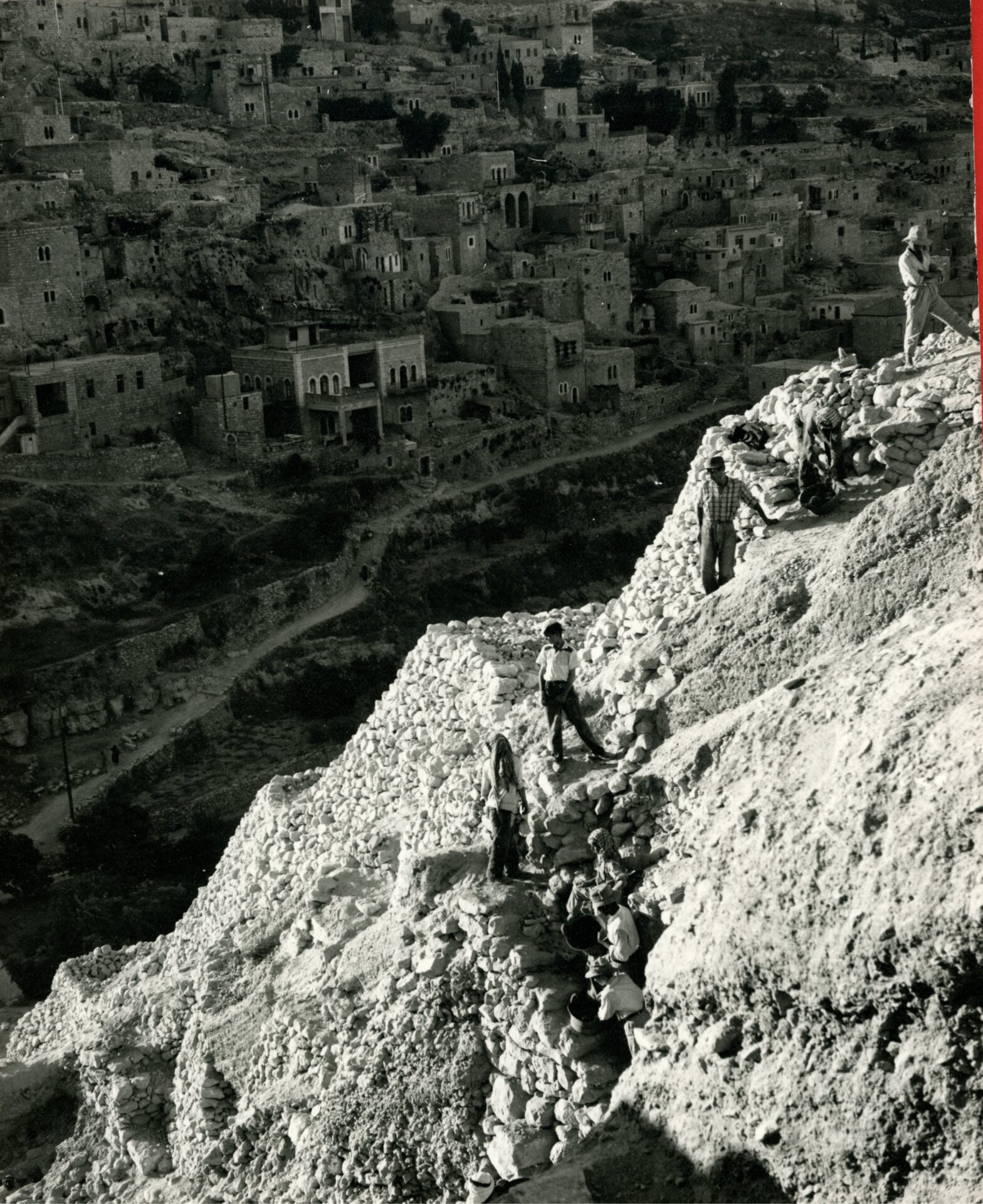
The second photograph depicts the slopes near the Armenian Quarter of the Old City. Rock-cut features carved into the limestone are visible along the hillside, characteristic of installations and burial caves located beyond the ancient city walls. This scene juxtaposes ancient funerary and industrial landscapes with later defensive architecture, highlighting the city’s long and layered history.
Together, the publication and photographs demonstrate how archaeology reveals the region as a continuous historical landscape shaped by multiple periods and cultures. They also document the evolution of archaeological practice, showing how careful stratigraphic excavation enabled researchers to systematically understand long occupation sequences. Preserved in our archive, these materials remain valuable records of both the ancient world and the history of its exploration.