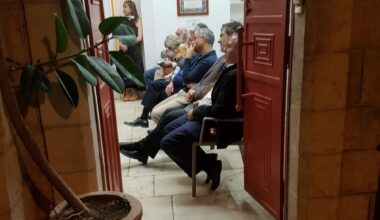


At the Third International Conference: Methodological Problems and Epistemological Trends in Palestinian Archaeology and Cultural Heritage, held at Bethlehem University on 18–19 November 2025, CBRL’s Senior Archivist Qasem Abu Harb delivered a presentation titled:
“CBRL Kenyon Institute: Exploring the Past – A Hundred Years of Digging in Palestine.”
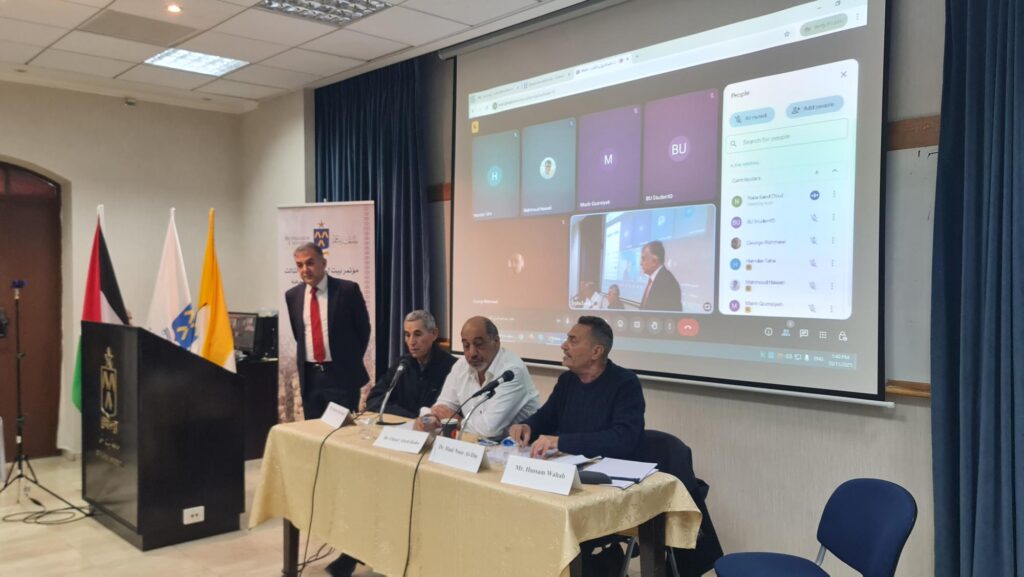
The presentation traced the Kenyon Institute’s long-standing contribution to archaeological scholarship in Palestine, highlighting both its historical foundations and its continued role in preserving, interpreting, and making accessible the records of a century of excavation and research. Abu Harb highlighted the legacy of pioneering archaeologists whose papers and field materials form the core of the Institute’s archival collections.
A Century of Excavators: Preserving the Legacy of Foundational Scholars
The presentation featured the distinguished group of archaeologists whose work shaped early twentieth-century research across Palestine and the wider Levant. Among the most significant figures represented in the archive are:
- John Garstang, whose excavations at Jericho and other major sites set new methodological standards.
- John Crowfoot, noted for his influential work on the archaeology of Jerusalem and Samaria.
- Harris Colt, whose field campaigns and photographic documentation remain indispensable for modern reinterpretation.
- Kathleen Kenyon, one of the most important figures in Near Eastern archaeology, whose Jericho excavations transformed our understanding of stratigraphy.
- Basil Hennessy, a leading scholar of prehistoric and early historic Palestine.
- Diana Kirkbride-Helbaek, known for her pioneering research at Petra and other Neolithic and Bronze Age sites.
- Crystal Bennett, whose extensive work in Jordan, including at Edom and Petra, left a lasting scholarly impact.
Abu Harb spoke about how the notebooks, plans, correspondence, negatives, drawings, and field reports produced by these scholars—carefully preserved within the Kenyon Institute’s archive—constitute an irreplaceable record of archaeological practice. These collections continue to shape contemporary scholarship and remain central to the reinterpretation of key sites across the region.
Islamic Jerusalem Project: A Growing and Accessible Collection
The presentation showed how the Islamic Jerusalem Archive Project is one of the Institute’s most significant recent undertakings. The project brings together a substantial body of material documenting the Islamic architectural, urban, and cultural history of Jerusalem, including:
- Historical photographs of mosques, madrasas, and neighbourhoods
- Architectural drawings and measured surveys
- Conservation notes and field sketches
- Mandate-period and post-1967 documentation of Islamic monuments
- Rare research papers and unpublished reports
Many of these materials are unique, and large portions of this collection are available via CBRL’s expanding digital repository. Abu Harb noted that the Islamic Jerusalem Archive Project is one of the most valuable resources for scholars working on Islamic architecture, urban history, and cultural heritage in Jerusalem.
CBRL’s Recent Digitisation Achievements
The Kenyon Institute in Jerusalem & The Amman Institute have undertaken significant digitisation initiatives in recent years, including the Endangered Archives Programme (2022–2025) supported by the British Library, and the landmark project Understanding Mandate Palestine (2023–2024), which made 99 rare books and more than 4,000 archival records freely accessible online. Alongside these efforts, CBRL has also been building a dedicated digital repository to ensure long-term preservation, improved accessibility, and sustainable management of its growing digital collections.
Abu Harb concluded by reaffirming that the Kenyon Institute’s mission—supporting research, preserving fragile archives, expanding digital access, and strengthening open knowledge infrastructures—which remains vital to safeguarding the cultural and archaeological heritage of Palestine and the wider Levant.